DVSA THEORY TEST PREP
Driving Theory Test UK 2026
Highway Code · Hazard Perception · 100+ Practice Tests
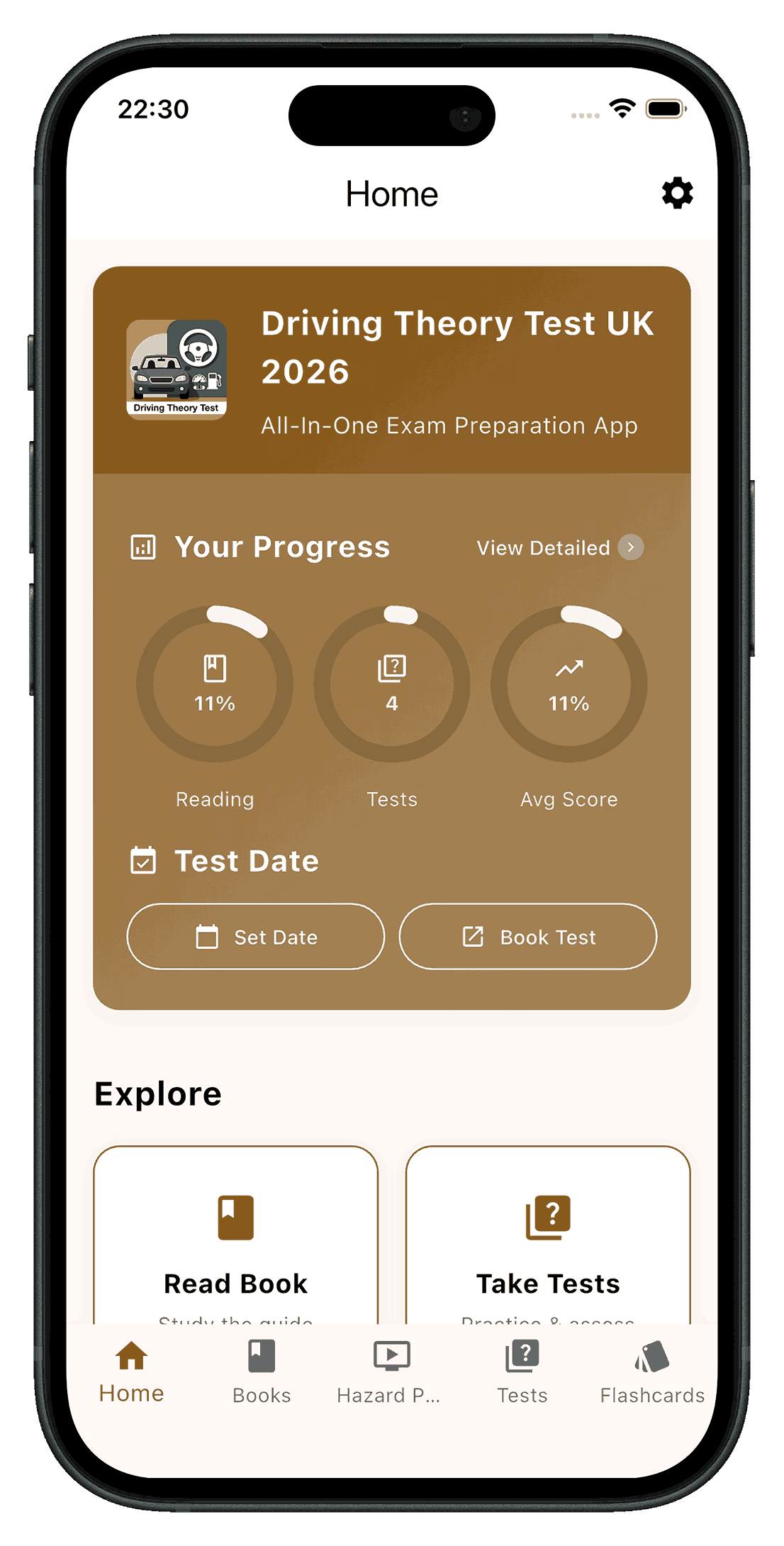
The ultimate UK Driving Theory Test preparation app with 100+ free practice tests, 1000+ questions, realistic hazard perception videos, the complete Highway Code, theory study materials, and interactive flashcards - all available offline. Everything you need to pass your driving theory test with confidence.


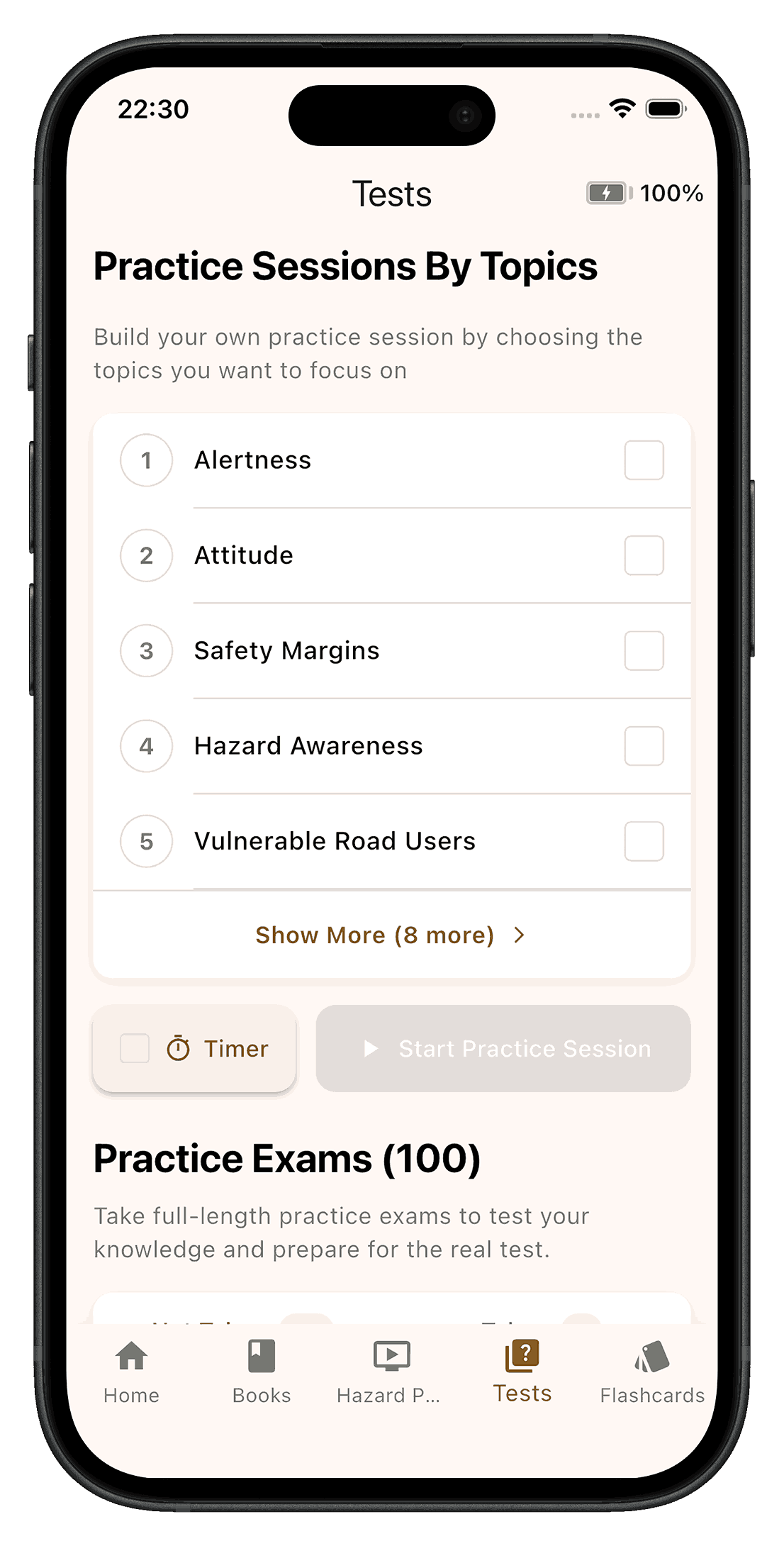
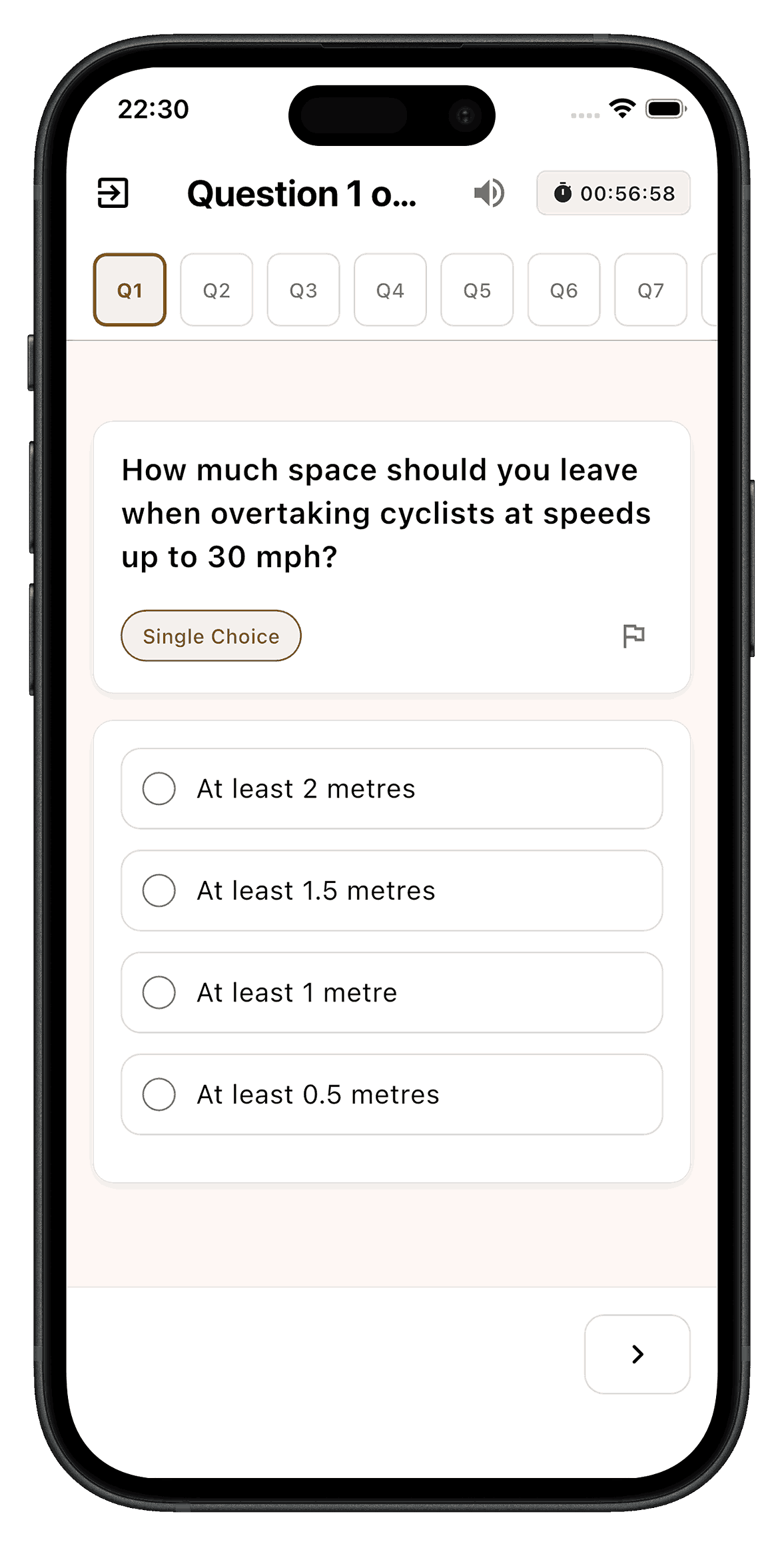
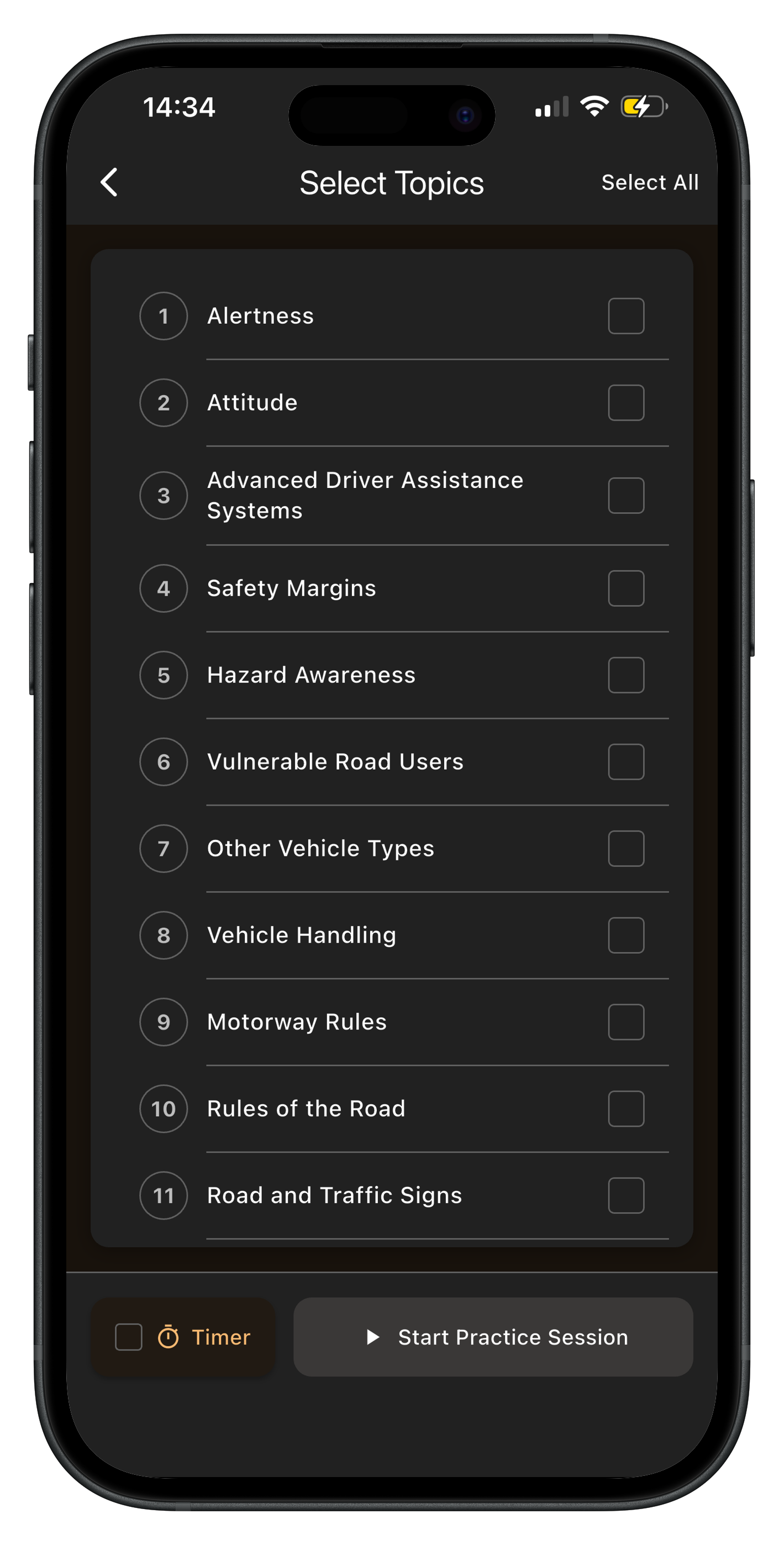
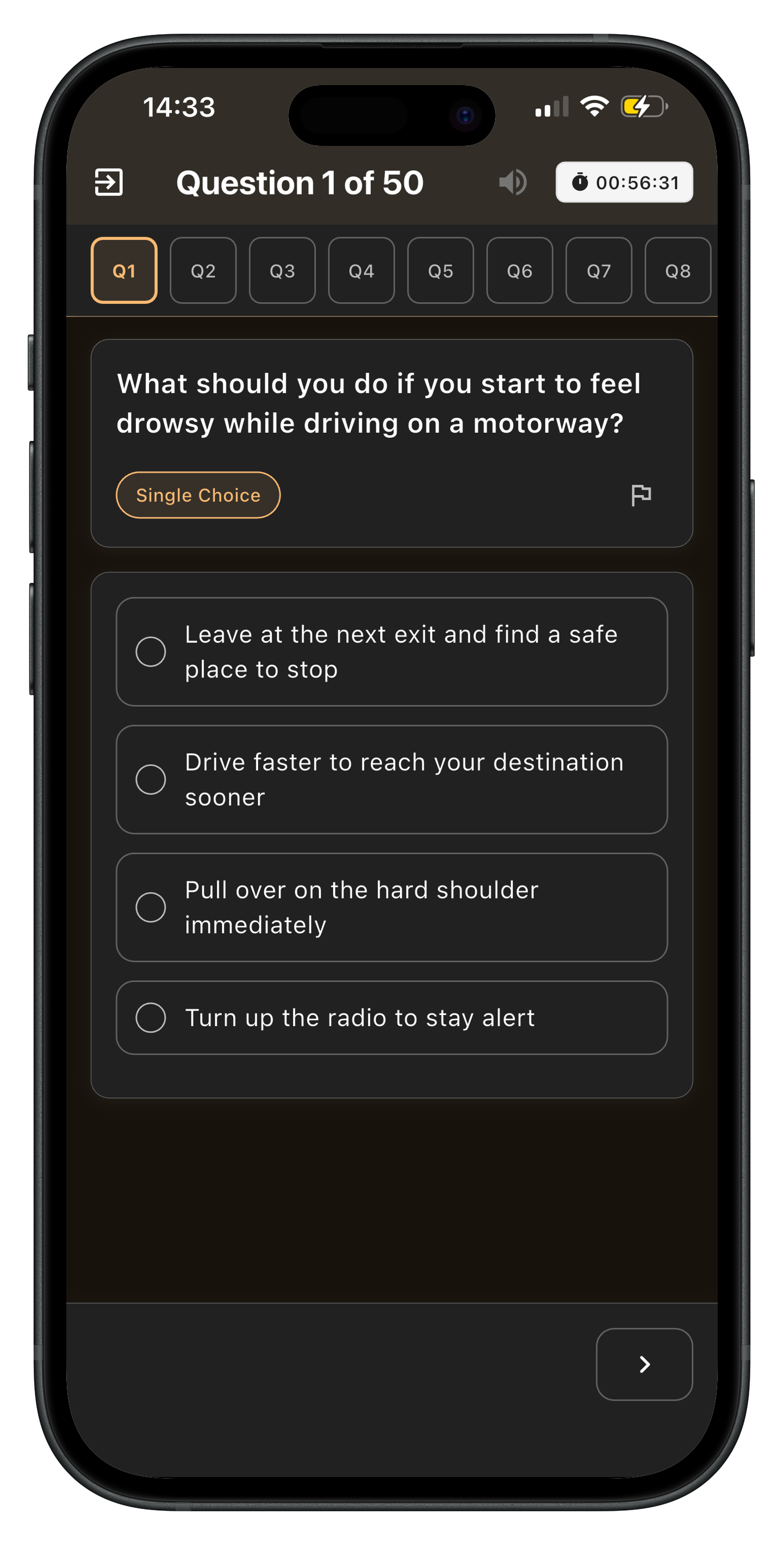
PRACTICE
DVSA-style mock tests that build exam confidence
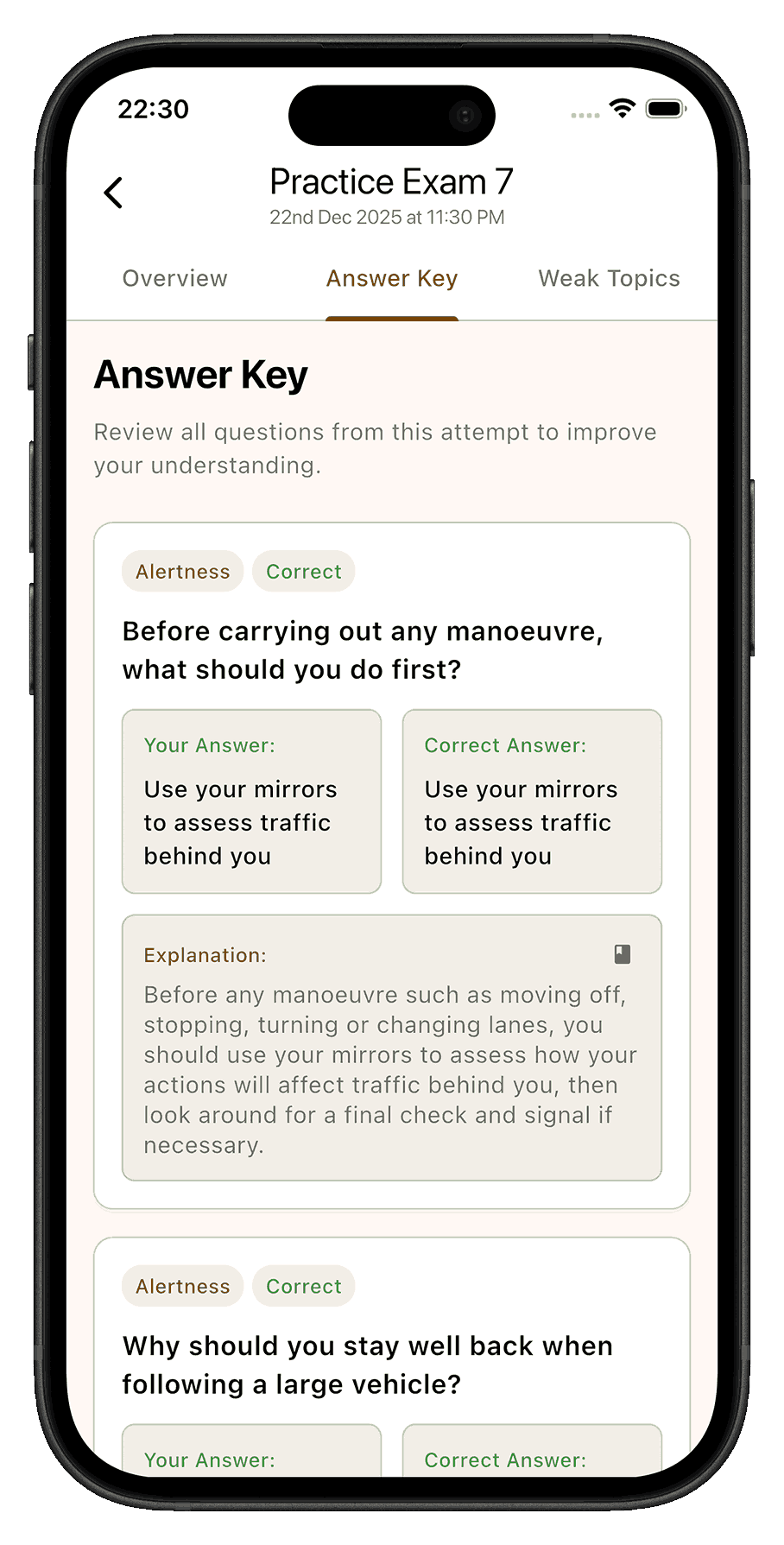
Take full-length practice exams and topic-wise sessions across the official theory test categories. Timed or untimed - you choose. Review every answer so you understand the rule, not just the option.
HAZARD PERCEPTION
Train your eye for developing hazards
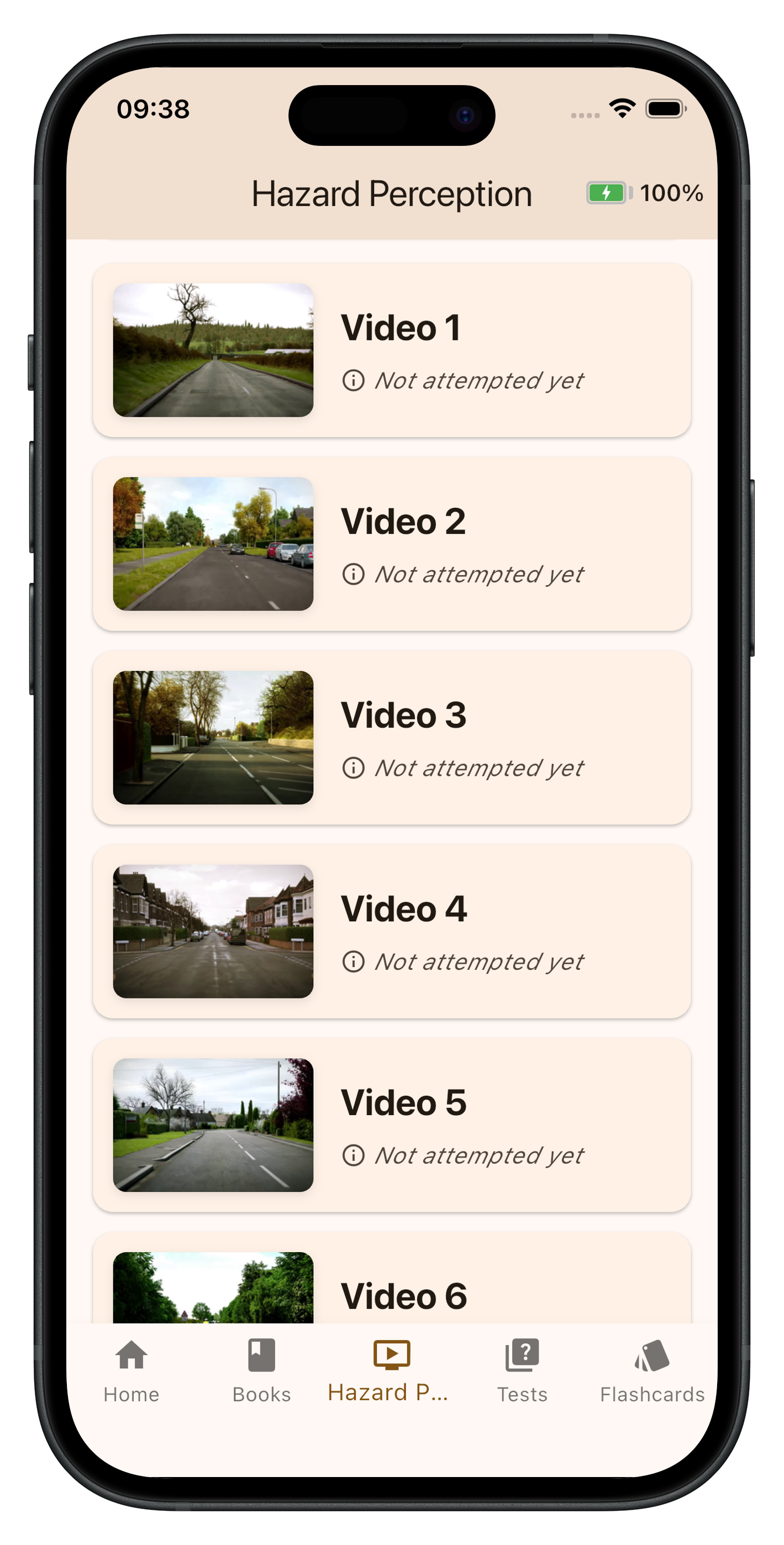
Hazard perception is about timing, not frantic clicking. Practise with realistic video scenarios, learn when the scoring window opens, and build the calm observation habits the DVSA test rewards.
HIGHWAY CODE
The complete study guide, organised for learners
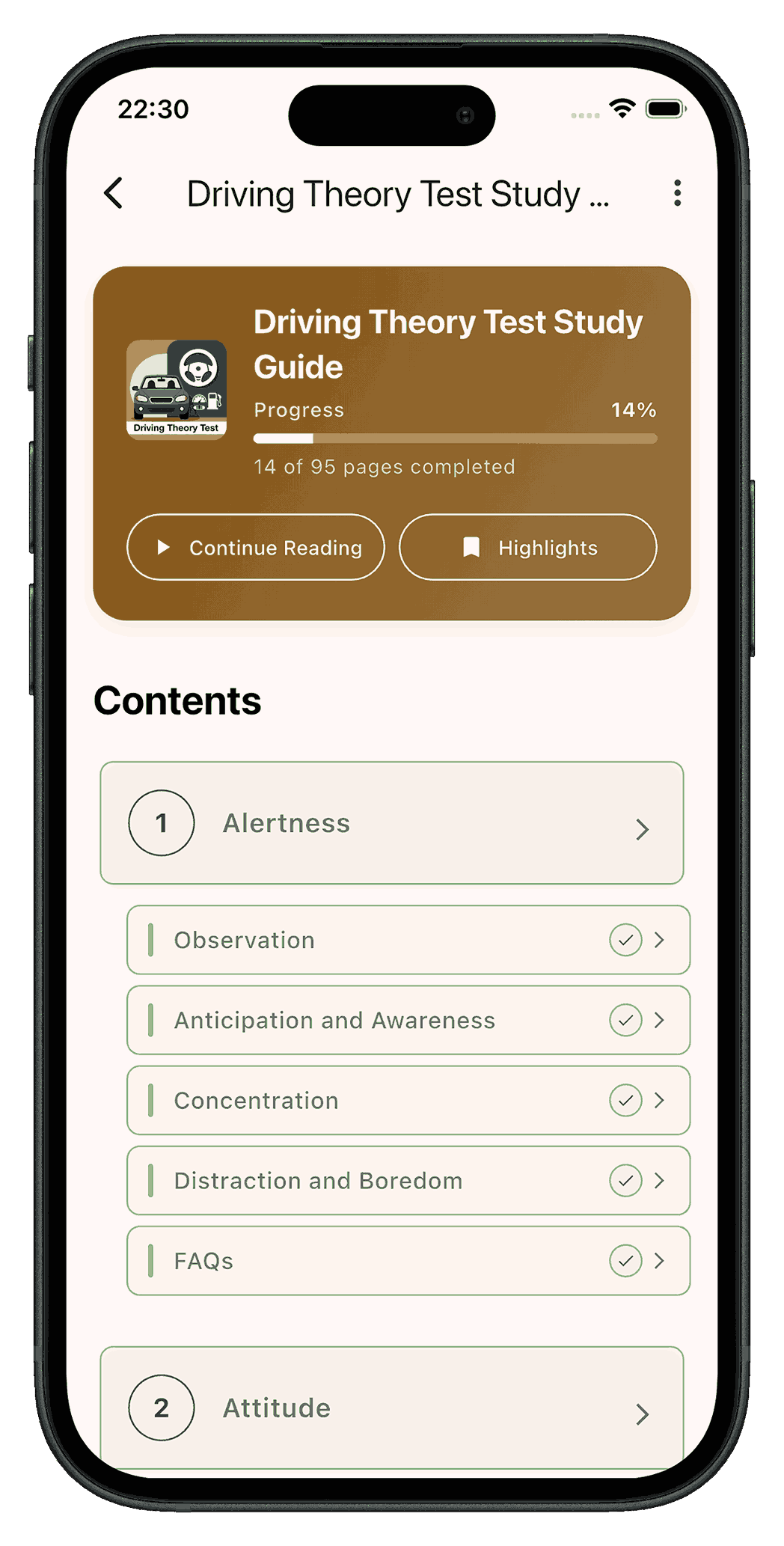
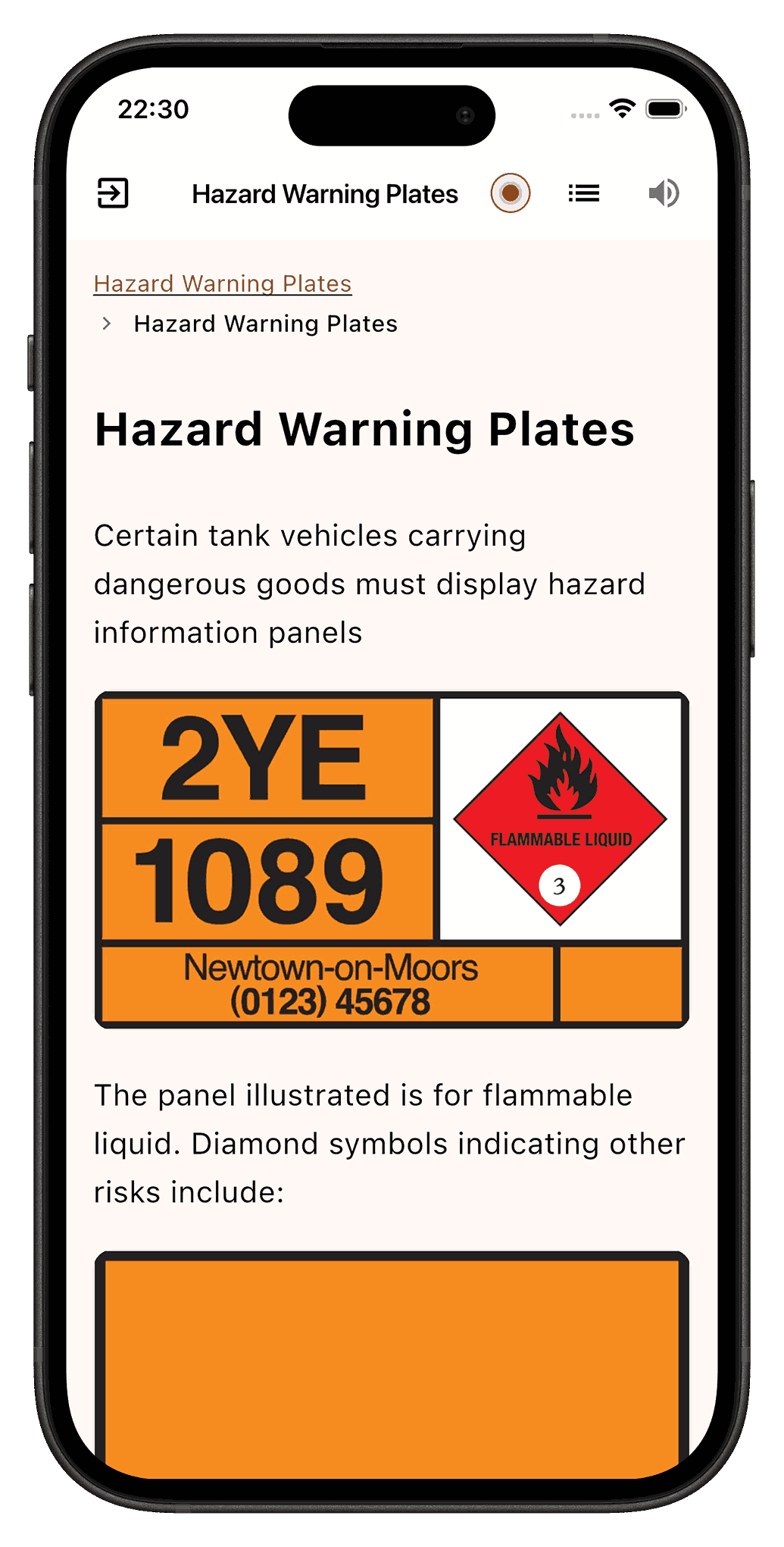
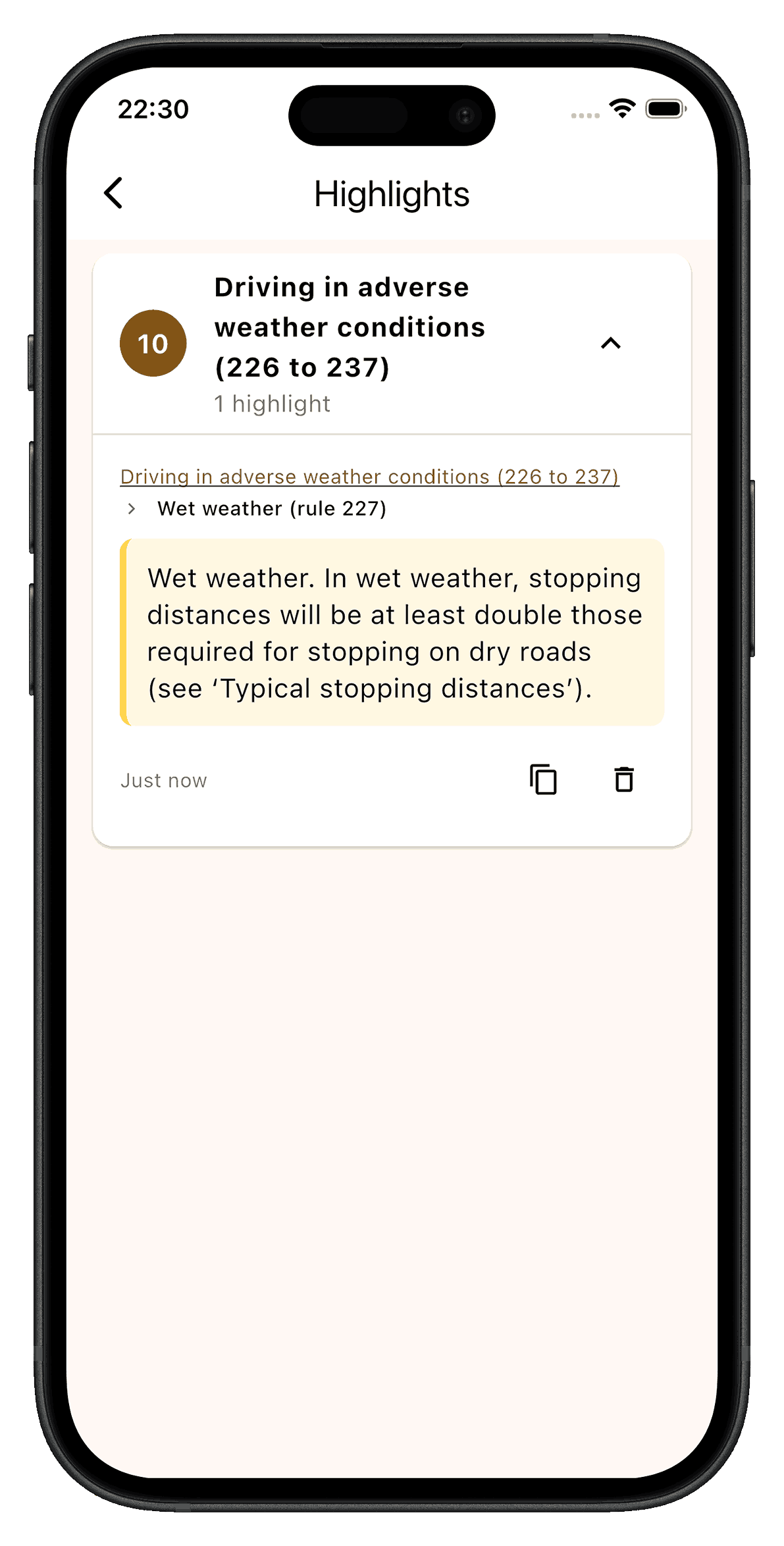
Read the full Highway Code study guide with progress tracking, bookmarks, and highlights. Cover road signs, vulnerable users, vehicle safety, first aid, and the rules that appear most often in the test.
INSIGHTS
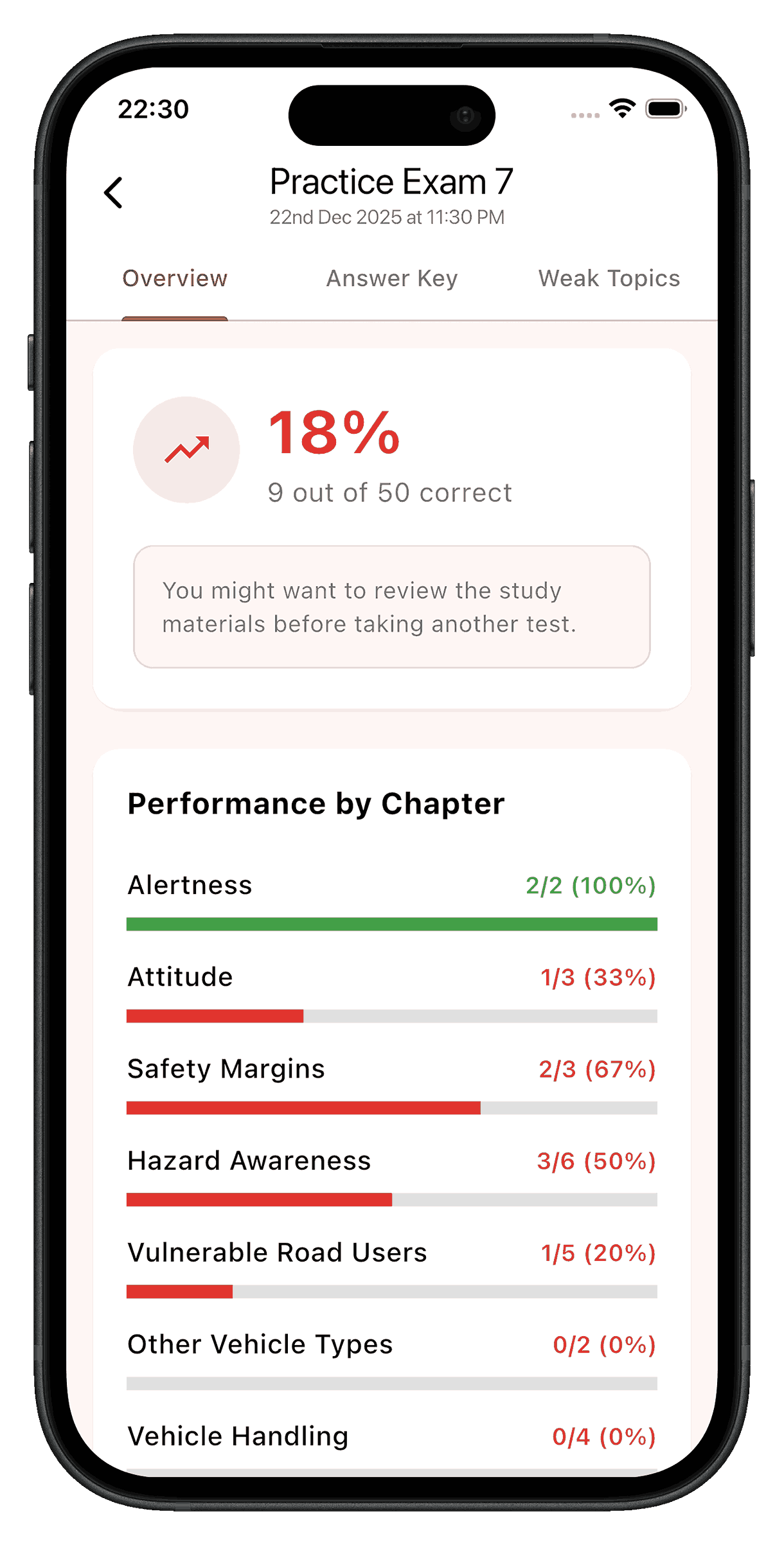
Know exactly what to revise next
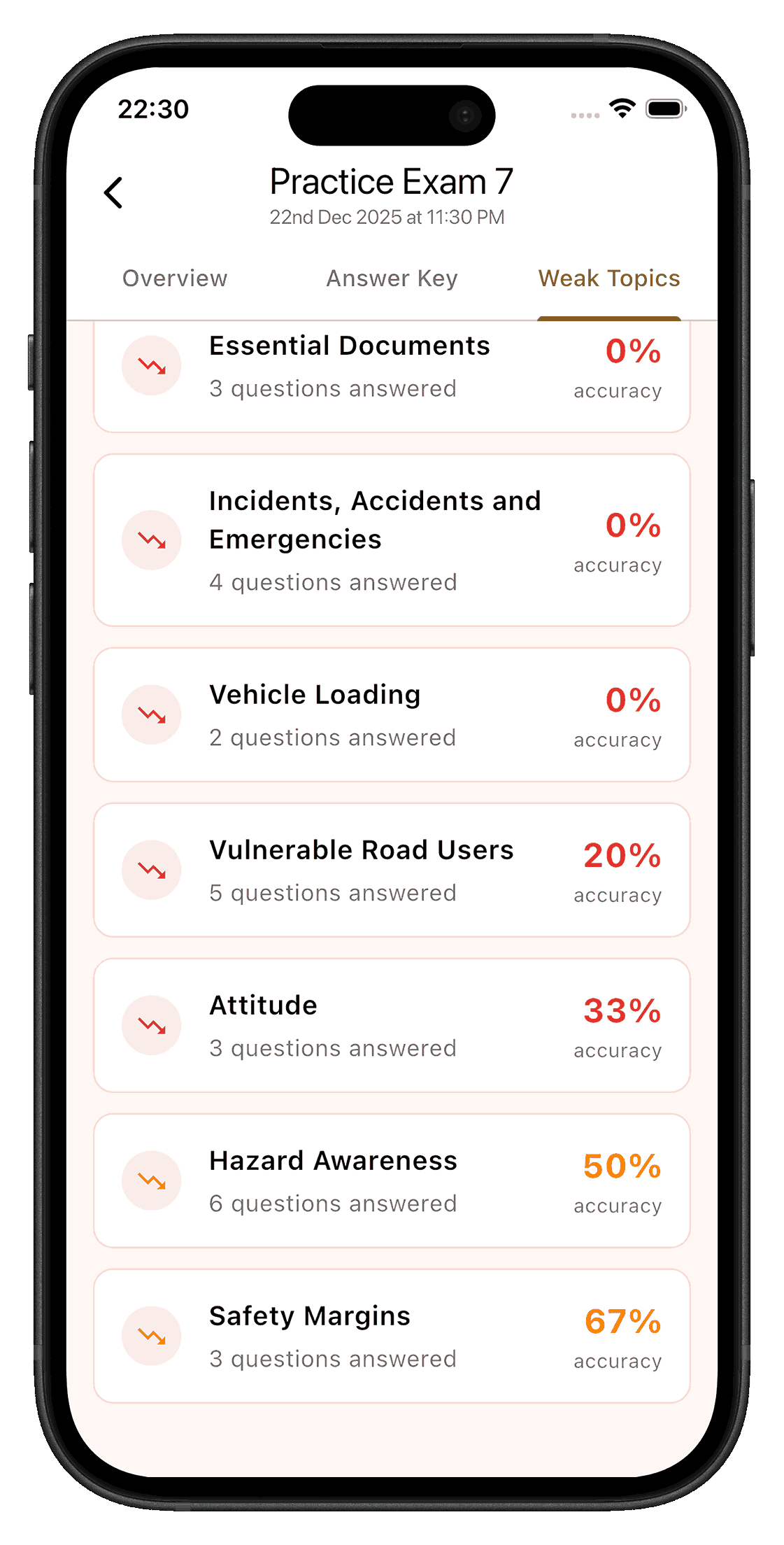
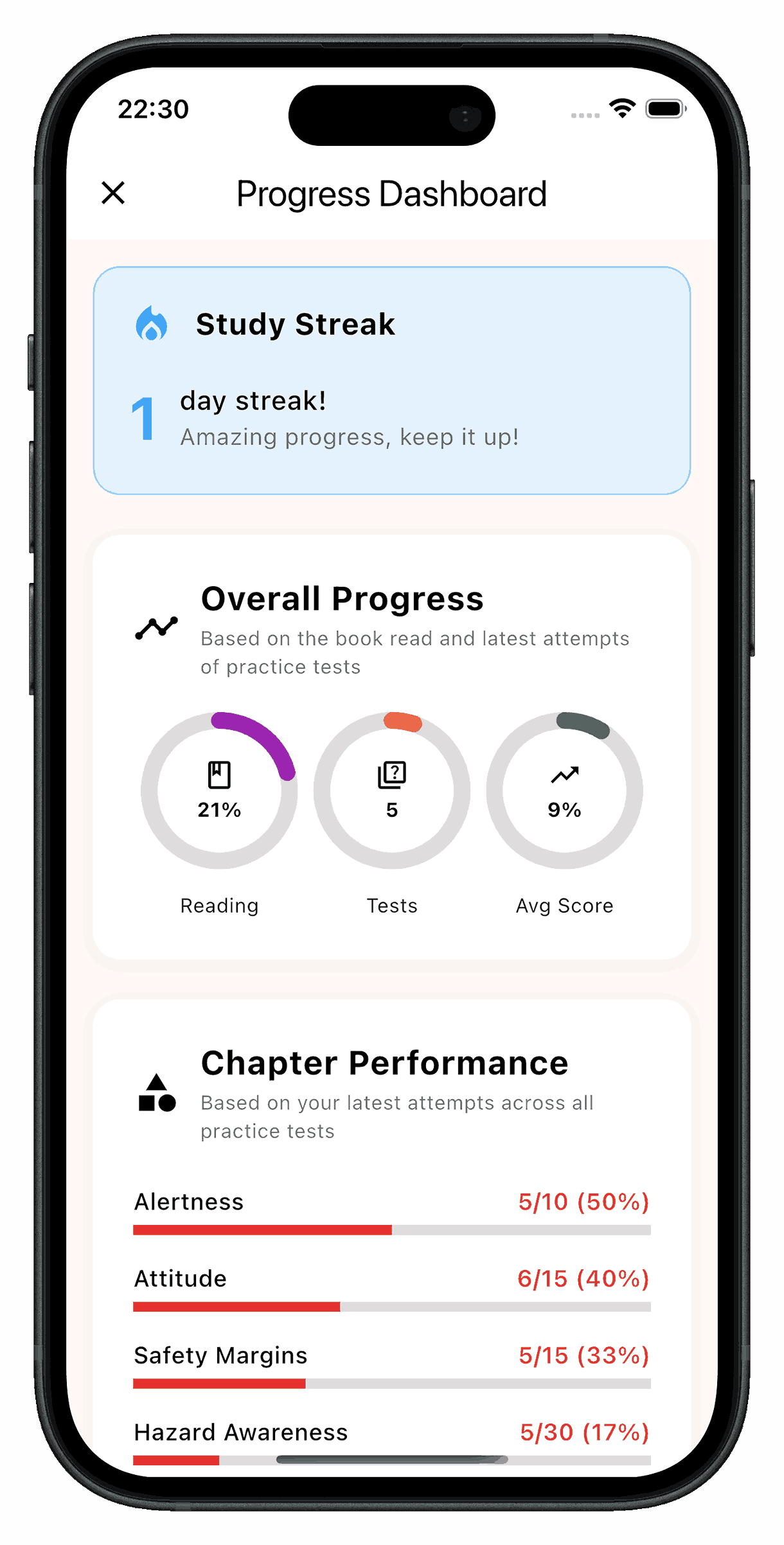
Detailed analytics break down your latest attempts by chapter, answer review, and weak topics. Focus on the categories costing you marks before you book the real test.
FLASHCARDS
Revise signs, rules, and first aid fast
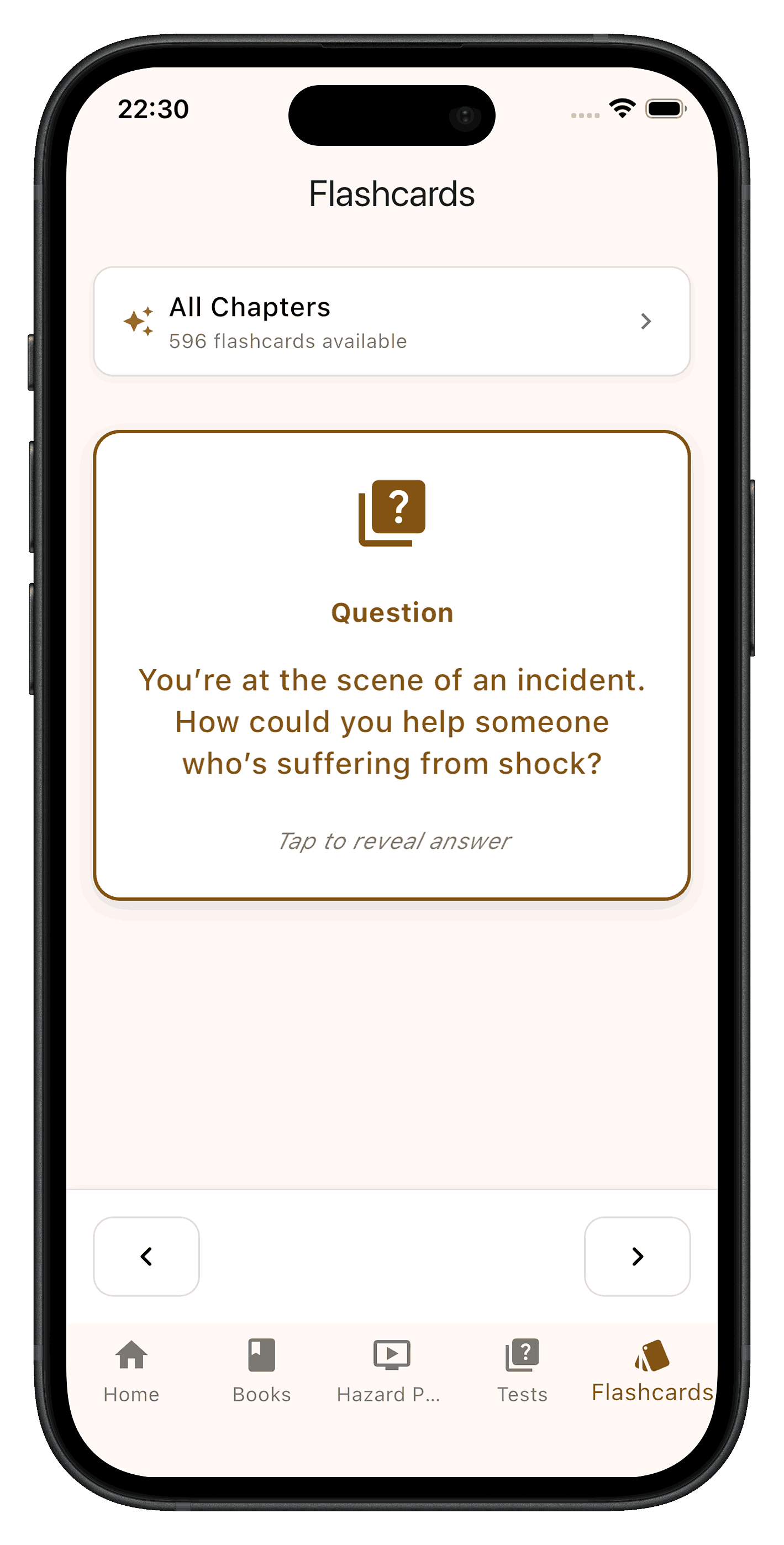
Use quick flip-card revision for road signs, legal limits, vulnerable road users, CPR and AED knowledge, and the small details that are easy to forget under exam pressure.
DARK MODE
Study comfortably day or night
Switch to a calm dark interface for late-night revision, evening commutes, and low-light study sessions. The same Highway Code, practice questions, flashcards, and analytics stay easy to read without glare.
ABOUT THE TEST
Everything you need to know before you book
The UK Driving Theory Test is a mandatory step for anyone learning to drive in Great Britain. Before you can book a practical driving test, you must pass the theory test - and both parts must be passed in the same sitting. The test is administered by the Driver and Vehicle Standards Agency (DVSA) at official test centres across England, Scotland, and Wales.
The test has two parts. The first is a multiple-choice section: 50 questions drawn from 14 topic categories, to be completed within 57 minutes. You need to answer at least 43 out of 50 correctly to pass. The second part is hazard perception: 14 video clips filmed from a driver's perspective, with a maximum score of 75 and a pass mark of 44. Critically, clicking five or more times in a short window on any single clip scores zero for that clip - a rule that catches many candidates who click anxiously rather than deliberately.
The multiple-choice section covers five main areas:
- Highway Code rules and road signs. Traffic laws, road markings, and the full range of UK signs - including the 2022 update introducing a formal road user hierarchy (Rules H1-H3), which changed junction priority and set specific passing distances for cyclists and horse riders.
- Hazard awareness and safe driving. Stopping distances, reaction times, adverse conditions, and identifying developing hazards before they become emergencies.
- Vulnerable road users. Specific rules for pedestrians, cyclists, motorcyclists, horse riders, and children - an area where the 2022 Highway Code changes introduced the most significant new question content.
- Vehicle safety and documents. Tyre tread depths, lights, loads, insurance, MOT, and the legal minimums candidates most often underrevise.
- First aid and emergency situations. CPR technique, AED operation, and the DRSABCD sequence - topics added more recently to reflect drivers being first on scene at emergencies.
The first-attempt pass rate sits at around 47%, meaning more than half of candidates fail on their first try. The most common reasons are treating the question bank as a memory exercise rather than understanding the rules behind each answer, skipping unfamiliar topic categories, and misreading questions that hinge on words like "always," "never," or "least likely." Candidates who work through all 14 categories and complete timed full mock tests before booking consistently perform better than those who only do topic-by-topic revision.
Booking is done through GOV.UK - you need your UK driving licence number and the current fee is £23. Your theory certificate is valid for two years, so if your practical test is likely to be more than two years away, wait before booking your theory.
FAQ
Common Questions About the Theory Test
Everything you need to know before booking and sitting the UK driving theory test.
Does the theory test result expire?
Yes. Your certificate is valid for two years from the date you pass. If you do not pass your practical test within that window, the theory result expires and you must retake it - and pay again - before rebooking your practical. Plan your timeline so your practical test falls well within the two-year period.
Can I retake the theory test if I fail?
Yes, there is no limit on retakes. You must wait at least three working days before rebooking. Each attempt costs £23. Your result letter shows your score for both sections separately - use this breakdown to identify which part needs more work before you rebook.
How much does the theory test cost?
The DVSA charges £23 for the car theory test, covering both the multiple-choice and hazard perception sections in the same sitting. Book through GOV.UK directly - third-party booking sites charge additional fees for the same appointment.
Where can I book the theory test?
Book directly through GOV.UK at gov.uk/book-theory-test. You will need your UK driving licence number. Test centres are located throughout England, Scotland, and Wales - you can search for the nearest one during the booking process.
What is the pass mark?
You need at least 43 out of 50 on the multiple-choice section and at least 44 out of 75 on hazard perception. Both must be passed in the same sitting - passing one and failing the other means failing the whole test. If your mock scores are consistently above 46 and 55 respectively, you are ready to book.
Is the 2026 test different from previous years?
The structure is the same - 50 questions and 14 clips - but the DVSA regularly updates the question bank. The 2022 Highway Code update added the road user hierarchy (H1-H3) throughout the test. CPR and AED questions have since been added, and video case studies are being incorporated to test scenario-based decision-making rather than fact recall.
What are the most common reasons people fail?
With a first-attempt pass rate of around 47%, failure is common. The most consistent patterns are: memorising answers without understanding the rule behind them; skipping categories like vehicle safety or environmental issues; misreading questions under pressure; and clicking too aggressively in hazard perception, triggering the five-click zero-score penalty.
How long should I spend preparing?
Most candidates who pass first time study for four to eight weeks. The final stretch should shift from topic revision to timed full mock tests - both sections back to back - to build stamina and identify any remaining weak categories before booking. At least three full mocks under real conditions is the standard recommendation.
STUDY RESOURCES
Essential guides to help you prepare
Free articles written by our team, based on DVSA test structure and Highway Code topics.

Why Most Learners Fail the Theory Test
Learn the avoidable mistakes that catch first-time candidates, from memorising answers to misreading questions under pressure.
Read article →
How Hazard Perception Scoring Actually Works
Understand scoring windows, the five-click rule, and what the DVSA means by a developing hazard.
Read article →
The Highway Code Hierarchy of Road Users
Rules H1, H2, and H3 changed junction priority and passing distances. Here is what it means for your theory test.
Read article →SANVIAPPS PORTFOLIO
Explore our other exam prep apps
Life in the UK, Citizenship Australia, GRE Quantitative Reasoning, and more.
View all apps
Ready to pass your UK Driving Theory Test?
Download the complete DVSA theory test preparation app with 100+ practice tests, hazard perception videos, Highway Code study materials, flashcards, and detailed analytics.