New 2026 Theory Test Questions: Master CPR & AED Updates!
The landscape of the DVSA Driving Theory Test is constantly evolving, reflecting the need for drivers to be more informed and better equipped for all situations they might encounter on the road. As we look towards 2026, significant updates are on the horizon, with a particular focus on crucial first aid knowledge: Cardiopulmonary Resuscitation (CPR) and Automated External Defibrillators (AEDs). These additions underscore a vital shift towards preparing drivers not just for safe driving, but for responsible and life-saving actions in emergencies.
For many years, the Theory Test has included basic first aid questions, covering topics like managing minor injuries or dealing with accident scenes. However, the planned inclusion of detailed questions on CPR and AEDs represents an enhanced commitment to ensuring new drivers possess foundational knowledge that could make a critical difference in a life-threatening situation. This isn't just about passing an exam; it's about equipping you with the readiness to act when seconds count.
Why CPR and AED Knowledge for Drivers?
Drivers are uniquely positioned to be first responders in various emergency scenarios. Whether witnessing a road traffic accident, encountering a medical emergency at the roadside, or even being present during a sudden collapse in a public place, a driver with basic first aid knowledge can be invaluable.
Consider these scenarios:
- Road Traffic Accidents: While the immediate focus is often on securing the scene and calling emergency services, casualties may require immediate medical attention. Knowing how to assess an unresponsive person and initiate CPR can sustain life until paramedics arrive.
- Medical Emergencies: A passenger in your vehicle or a pedestrian you encounter might suffer a sudden cardiac arrest. Having the confidence and knowledge to apply CPR or locate and use an AED could significantly improve their chances of survival.
- Community Responsibility: As drivers, we are part of a wider community. The skills learned for the theory test extend beyond the car, empowering you to respond effectively to medical emergencies anywhere.
The DVSA's move to include more specific questions on CPR and AEDs reflects the understanding that a responsible driver is not just skilled behind the wheel, but also capable and prepared to assist in critical moments.
Understanding the Basics: CPR
CPR, or Cardiopulmonary Resuscitation, is an emergency procedure that combines chest compressions with artificial ventilation (rescue breaths) to manually preserve brain function until further measures are taken to restore spontaneous blood circulation and breathing.
For the purpose of the Theory Test, and more importantly, for real-world readiness, here's what you should know:
- Recognising the Need: CPR is needed when someone is unresponsive and not breathing normally (or at all). If you find someone collapsed, try to rouse them. If there's no response and no normal breathing, call 999 immediately.
- Calling for Help: Your first action should always be to call 999 (or 112) for an ambulance. Inform them of the situation and location clearly. If you are with someone else, ask them to call while you begin CPR.
- Chest Compressions:
- Kneel beside the person.
- Place the heel of one hand in the centre of their chest, then place your other hand on top.
- Interlock your fingers and ensure pressure is applied through the heel of your hand, not your fingers.
- Keep your arms straight and position yourself directly over their chest.
- Push down hard and fast, compressing the chest by about 5-6 cm (about 2-2.5 inches).
- Aim for a rate of 100-120 compressions per minute (think of the beat of "Stayin' Alive" by the Bee Gees).
- Allow the chest to fully recoil after each compression.
- Rescue Breaths (Optional, but encouraged if trained):
- After 30 compressions, open the person's airway by tilting their head back and lifting their chin.
- Pinch their nose, seal your mouth over theirs, and give two slow breaths, each lasting about one second, watching for their chest to rise.
- Continue cycles of 30 compressions and 2 breaths.
- Hands-Only CPR: If you are not trained or are uncomfortable giving rescue breaths, performing continuous chest compressions (hands-only CPR) is still incredibly effective and highly recommended. The most important thing is to act.
- Continue CPR: Keep going until professional medical help arrives, the person starts to show signs of recovery (e.g., breathing normally), or you become too exhausted to continue.
Understanding the Basics: AED
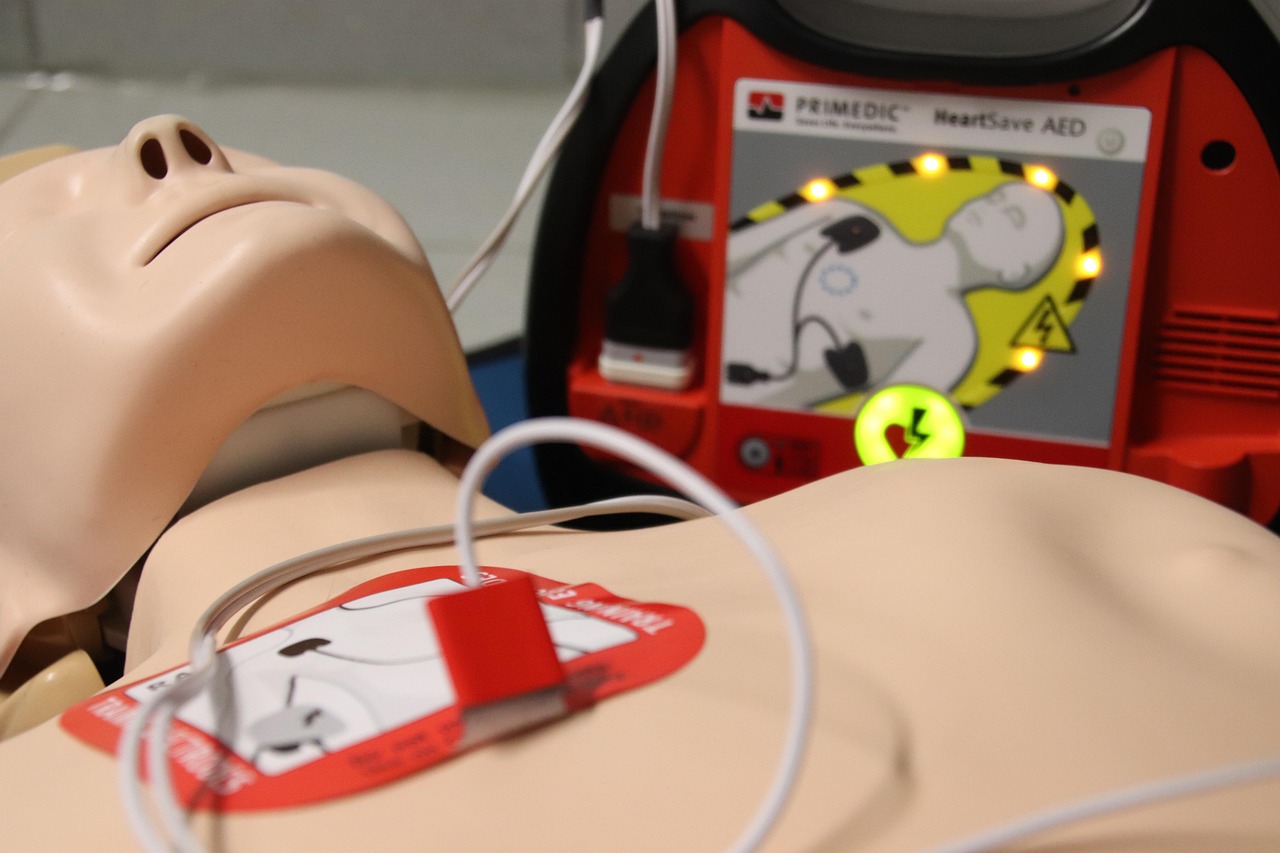
An AED, or Automated External Defibrillator, is a portable electronic device that automatically diagnoses the life-threatening cardiac arrhythmias of ventricular fibrillation and pulseless ventricular tachycardia, and is able to treat them through defibrillation, allowing the heart to re-establish an effective rhythm. Essentially, it delivers an electrical shock to restart a heart that has stopped suddenly.
Key points about AEDs for drivers:
- Sudden Cardiac Arrest: AEDs are used specifically for sudden cardiac arrest, where the heart suddenly and unexpectedly stops beating effectively.
- Public Accessibility: AEDs are becoming increasingly common in public places – shopping centres, sports facilities, train stations, airports, and even some service stations. Knowing where they are located in familiar areas can save precious minutes.
- Ease of Use: Don't be intimidated by an AED. They are designed to be used by untrained bystanders. Once switched on, the device provides clear, spoken instructions, guiding you through each step.
- Steps for Use:
- Call 999 immediately.
- If available, send someone to fetch the nearest AED.
- Continue CPR until the AED arrives.
- Once the AED is present, expose the person's chest and apply the pads as shown in the diagrams on the pads themselves (usually one below the collarbone, one on the side of the chest).
- Plug the pads into the AED.
- The AED will then analyse the heart rhythm and advise whether a shock is needed. Crucially, it will only deliver a shock if it detects a shockable rhythm.
- If a shock is advised, ensure no one is touching the person ("STAND CLEAR!"). Press the shock button when prompted.
- After the shock, or if no shock is advised, continue CPR immediately until paramedics arrive or the person recovers.
What Does This Mean for the 2026 Theory Test?
The integration of CPR and AED topics into the Theory Test signals that you should expect questions designed to assess your fundamental understanding and awareness. These won't be in-depth medical questions, but rather scenario-based or knowledge-based questions that test:
- Recognition: Can you identify when CPR or an AED might be needed?
- Initial Actions: Do you know the critical first steps, such as calling 999?
- Basic Principles: Do you understand the core mechanics of chest compressions or the purpose of an AED?
- Safety: Are you aware of basic safety considerations when using an AED (e.g., ensuring no one touches the person during a shock)?
- Hierarchy of Action: What steps do you take first in a roadside emergency involving an unresponsive casualty?
These questions will ensure that, as a new driver, you have a basic grasp of these life-saving techniques and the confidence to take appropriate action in an emergency.
Preparing for the New Questions
To effectively prepare for these new additions to the Theory Test, consider the following strategies:
- Consult Official Resources: Always refer to the latest edition of The Highway Code and official DVSA study materials. They will be updated to reflect these new requirements.
- Review First Aid Guidelines: Familiarise yourself with current UK Resuscitation Council (Resus Council UK) guidelines for CPR and AED use. Many charities like St John Ambulance or the British Heart Foundation offer accessible information.
- Practice Theory Questions: The best way to prepare for any new test content is through targeted practice. The DVSA Driving Theory Test preparation app can be an invaluable tool to practice new question formats, understand the structure, and ensure you're up-to-date with all the latest information, including these critical first aid components.
- Consider a First Aid Course: While not mandatory for the Theory Test, taking a basic first aid course (e.g., Emergency First Aid at Work or a general first aid course) will not only equip you with practical, hands-on skills but also deepen your understanding of the theoretical concepts, making the test questions much easier to answer.
Beyond the Test: Real-World Readiness
The new 2026 Theory Test questions on CPR and AEDs are more than just another set of topics to memorise. They represent an opportunity to empower you with knowledge that transcends the driving test itself. While passing the exam is your immediate goal, the real value lies in the potential to save a life.
Embrace these updates not as a burden, but as a chance to become a truly responsible and capable road user. By understanding the basics of CPR and AEDs, you'll be better prepared to react calmly and effectively in critical situations, making our roads and communities safer for everyone. Your actions in an emergency could be the difference between life and death.
🚗 Ready to Pass?
Master the UK DVSA driving theory test with 100+ realistic practice tests, 1000+ question bank, hazard perception videos, and the complete Highway Code.