GRE QUANT PREP
GRE Quantitative Reasoning 2026
100+ Practice Tests · 1000+ Questions · Smart Analytics
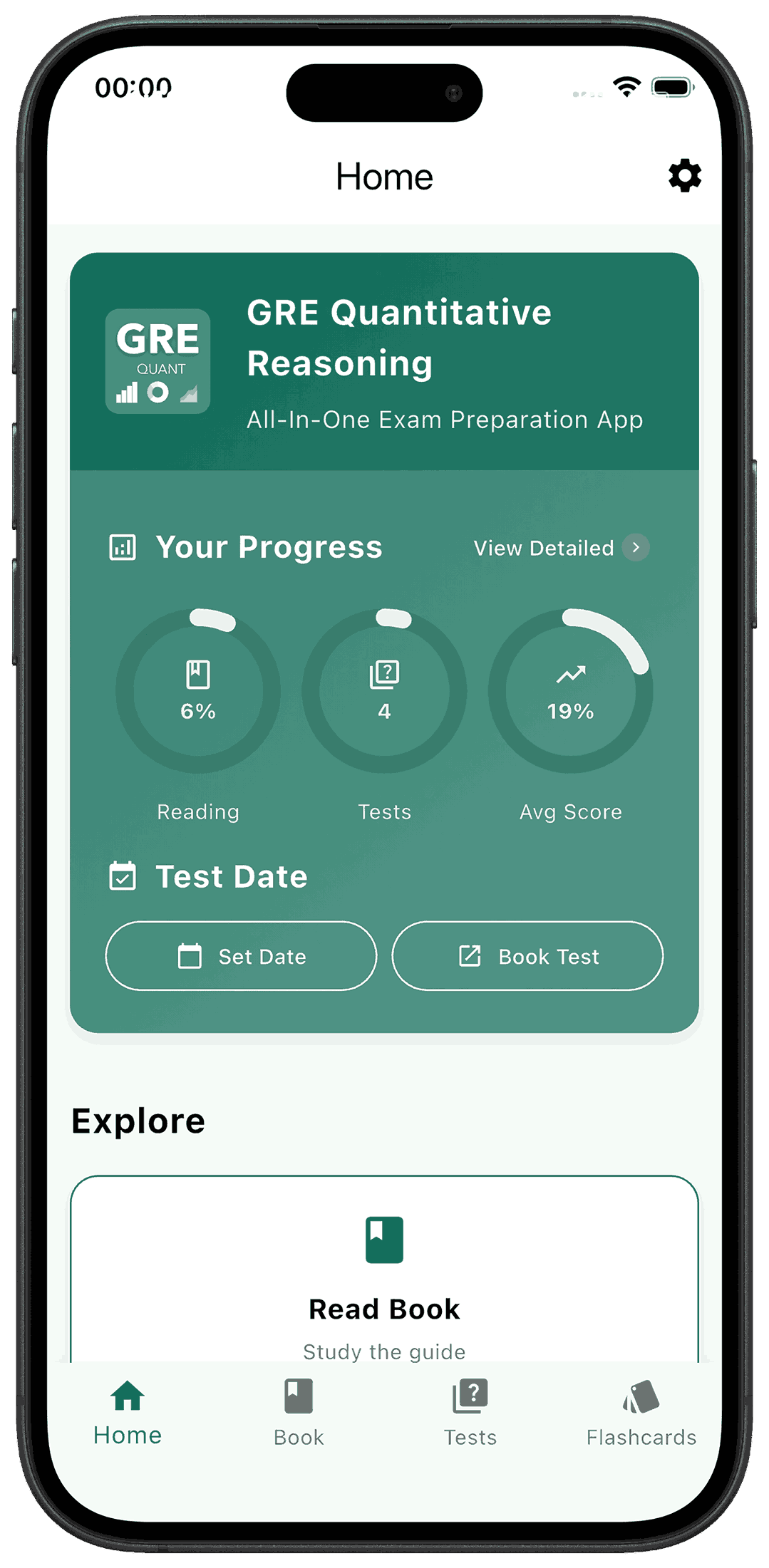
The most comprehensive GRE Quantitative Reasoning preparation app with 100+ practice tests, 1000+ questions, a complete study guide, formula flashcards, and detailed performance analytics. Everything you need to build accuracy, pacing, and confidence.

PRACTICE
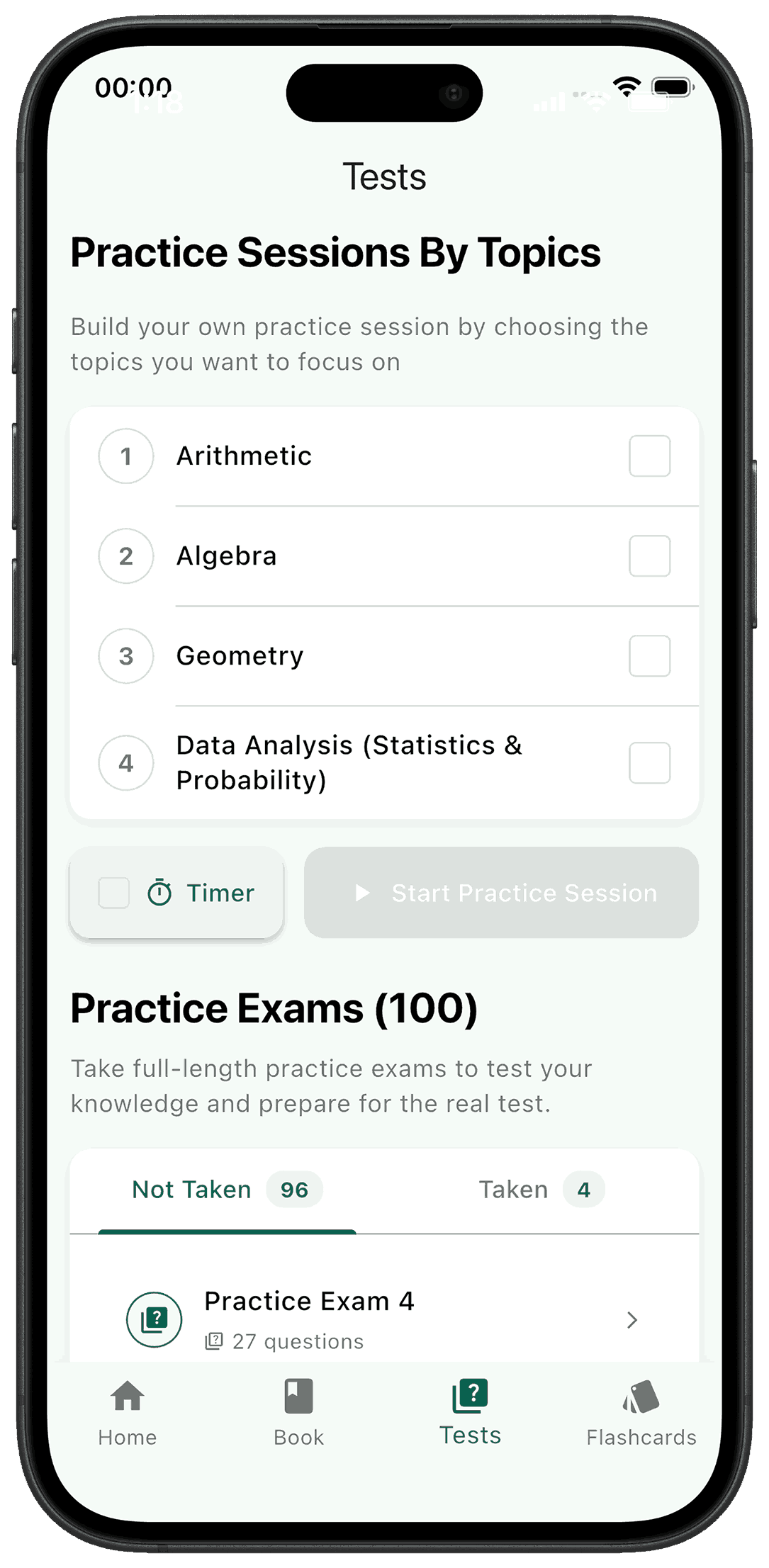
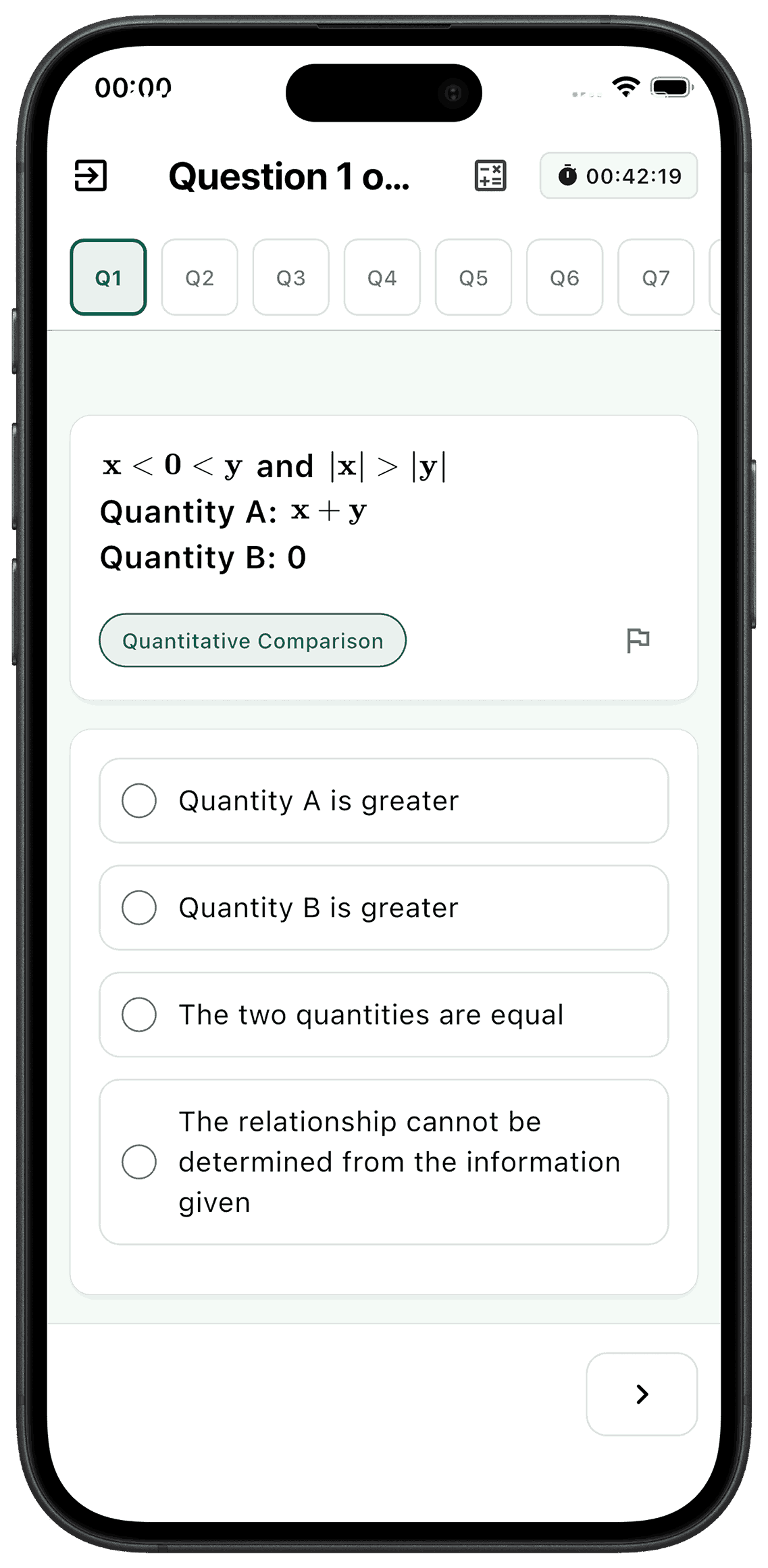
GRE Quant practice that feels like the real exam
Take full-length mock tests and targeted topic sessions across arithmetic, algebra, geometry, and data analysis. Practise Quantitative Comparison, numeric entry, and select-one-or-more questions under timed or untimed conditions.
INSIGHTS
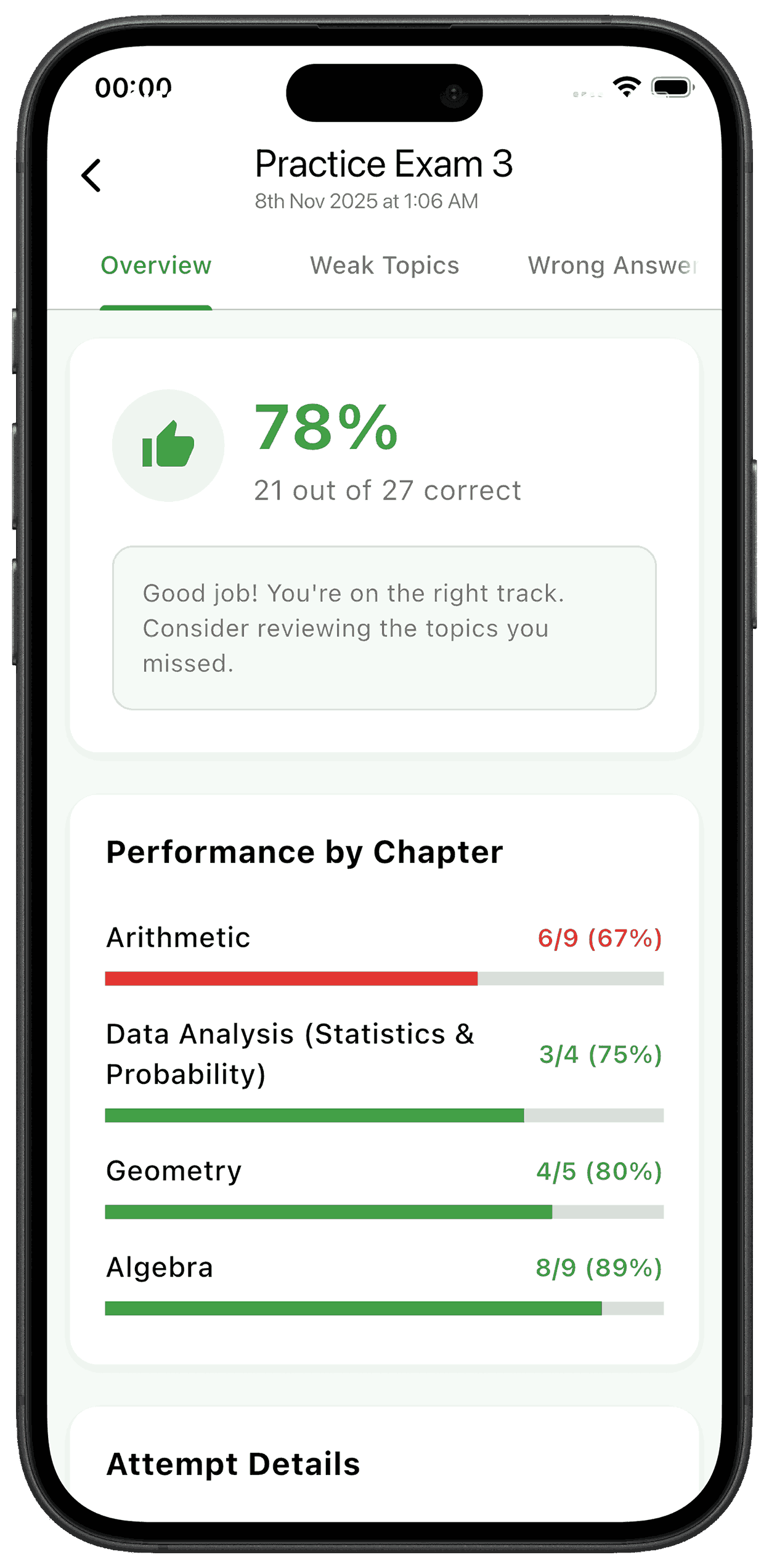
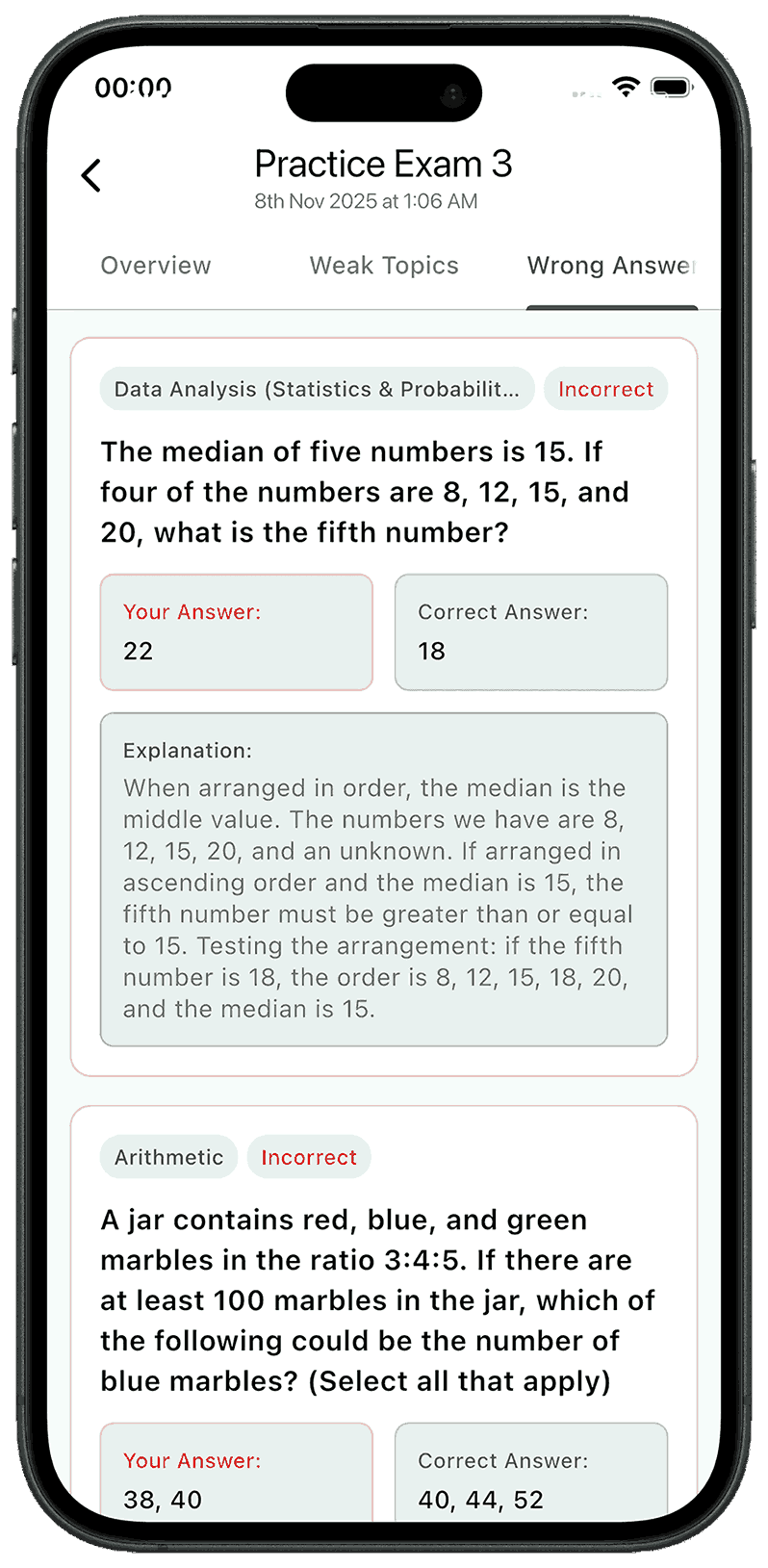
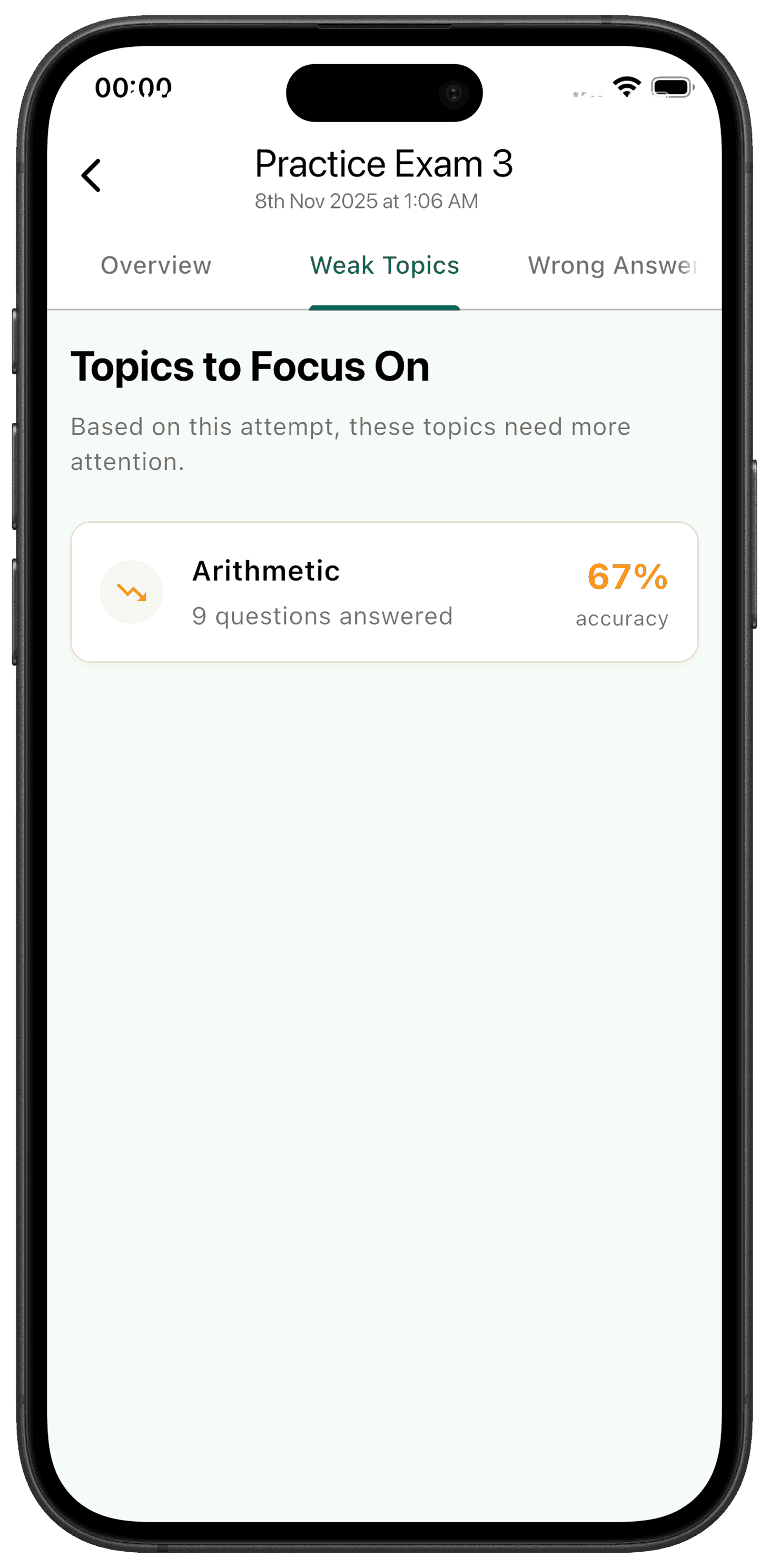
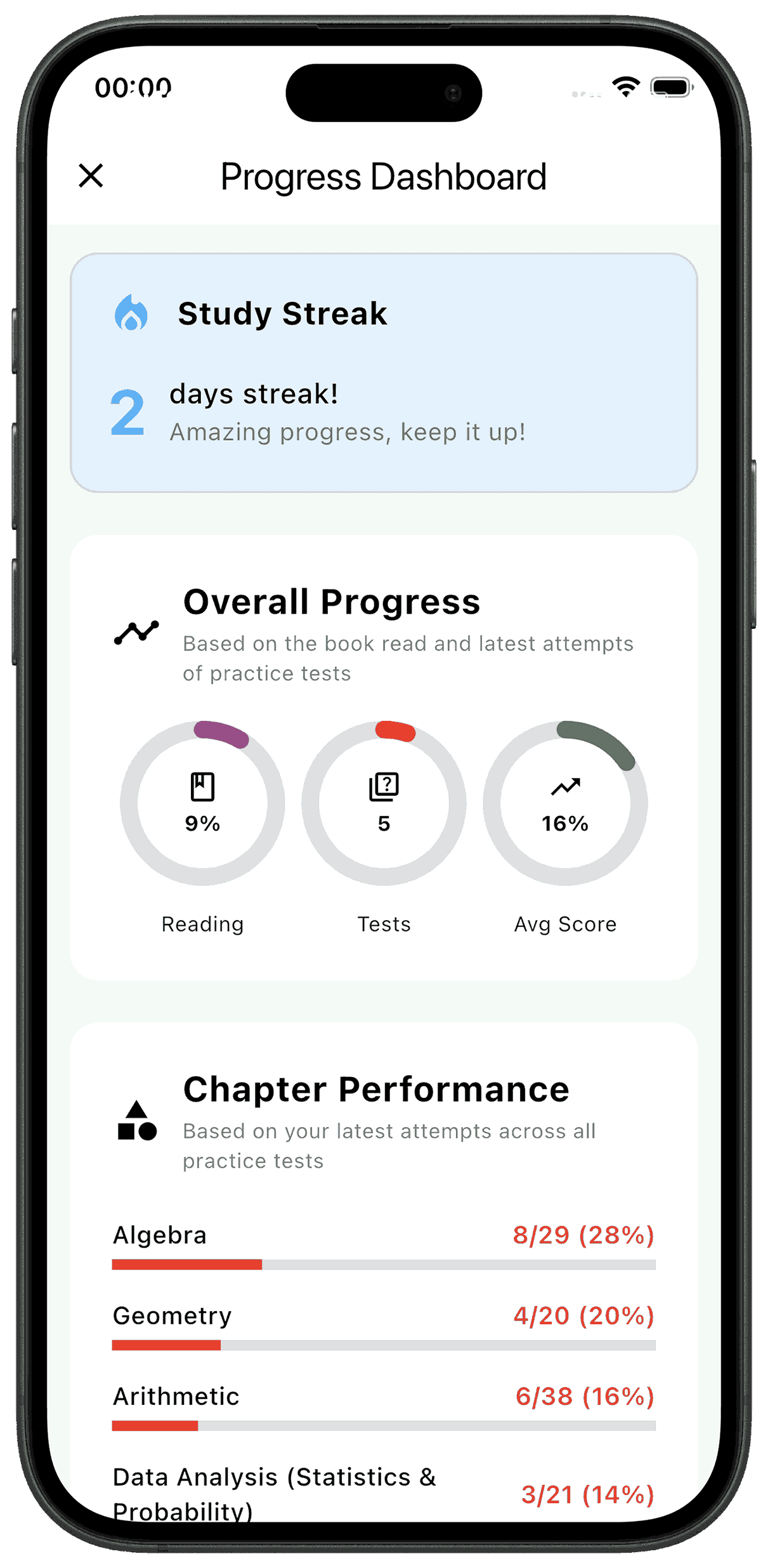
Find the topics costing you points
Smart analytics reveal chapter performance, weak topics, and answer-review patterns so every study session has a purpose. Turn error logs into a clear route from shaky topics to reliable accuracy.
STUDY GUIDE
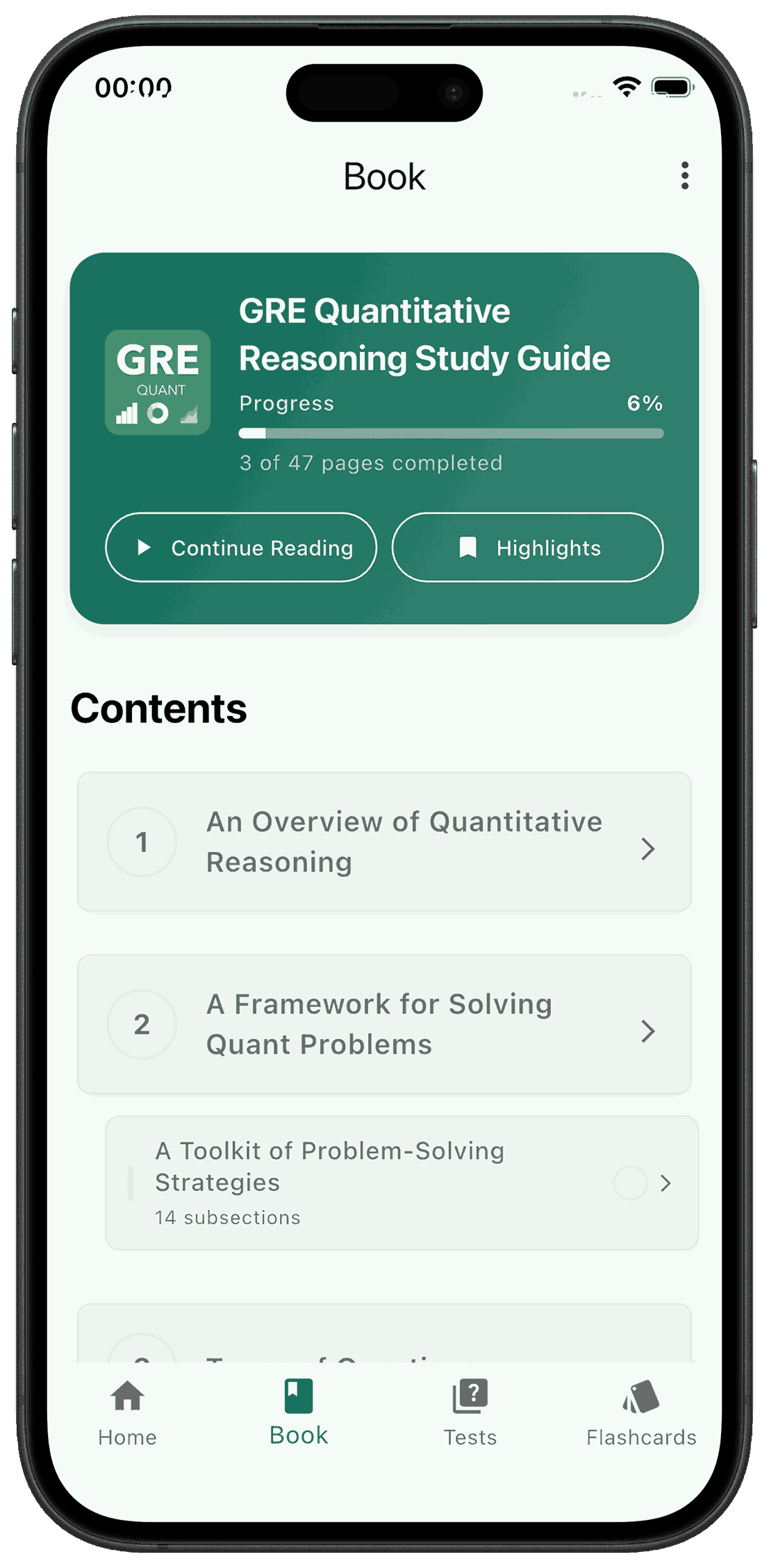
A complete Quant guide built for score gains
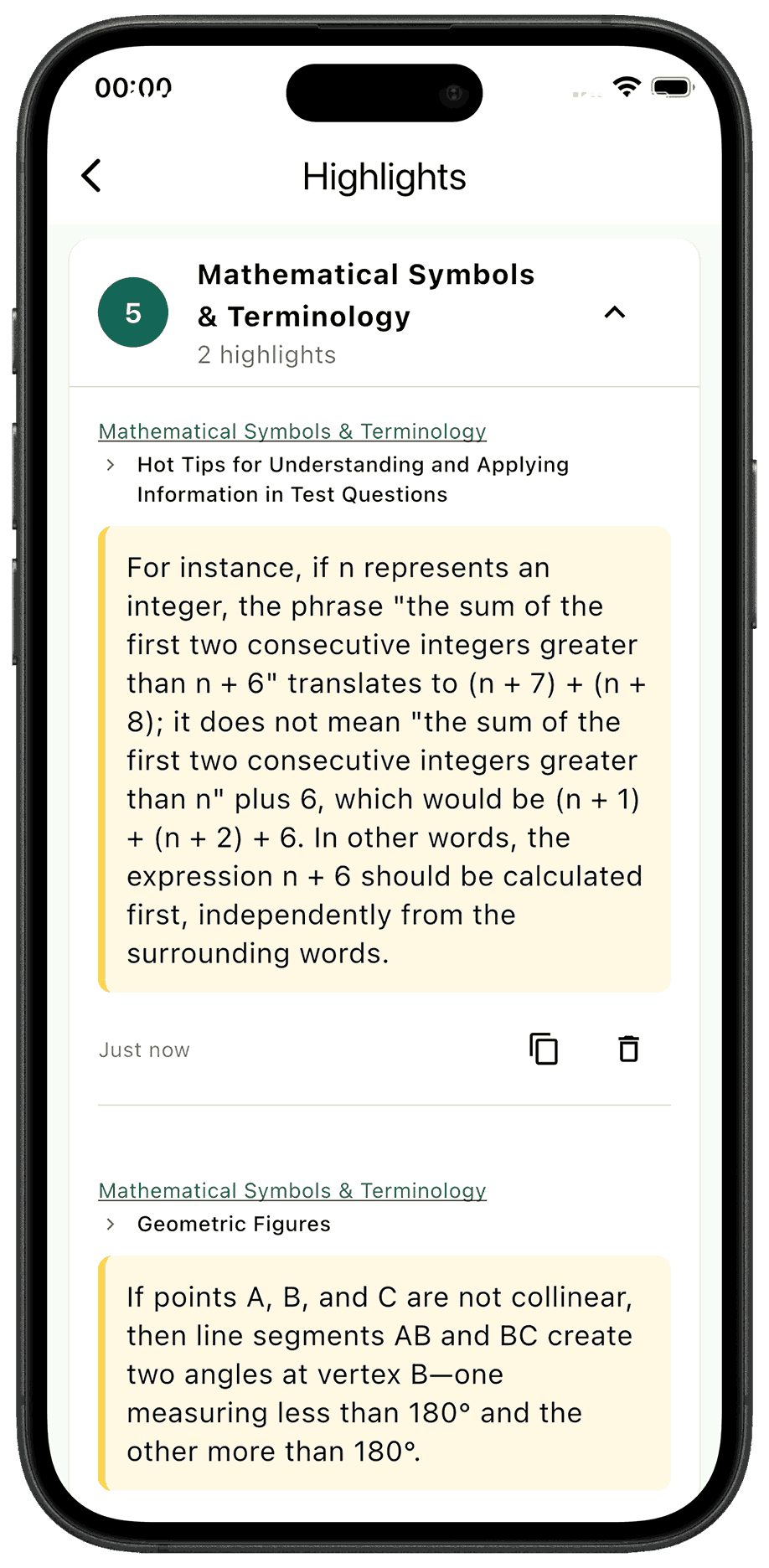
Review the core GRE Quant topics with a structured guide covering arithmetic, algebra, geometry, data analysis, strategy, and pacing. Highlight formulas and revisit the material that needs another pass.
FLASHCARDS
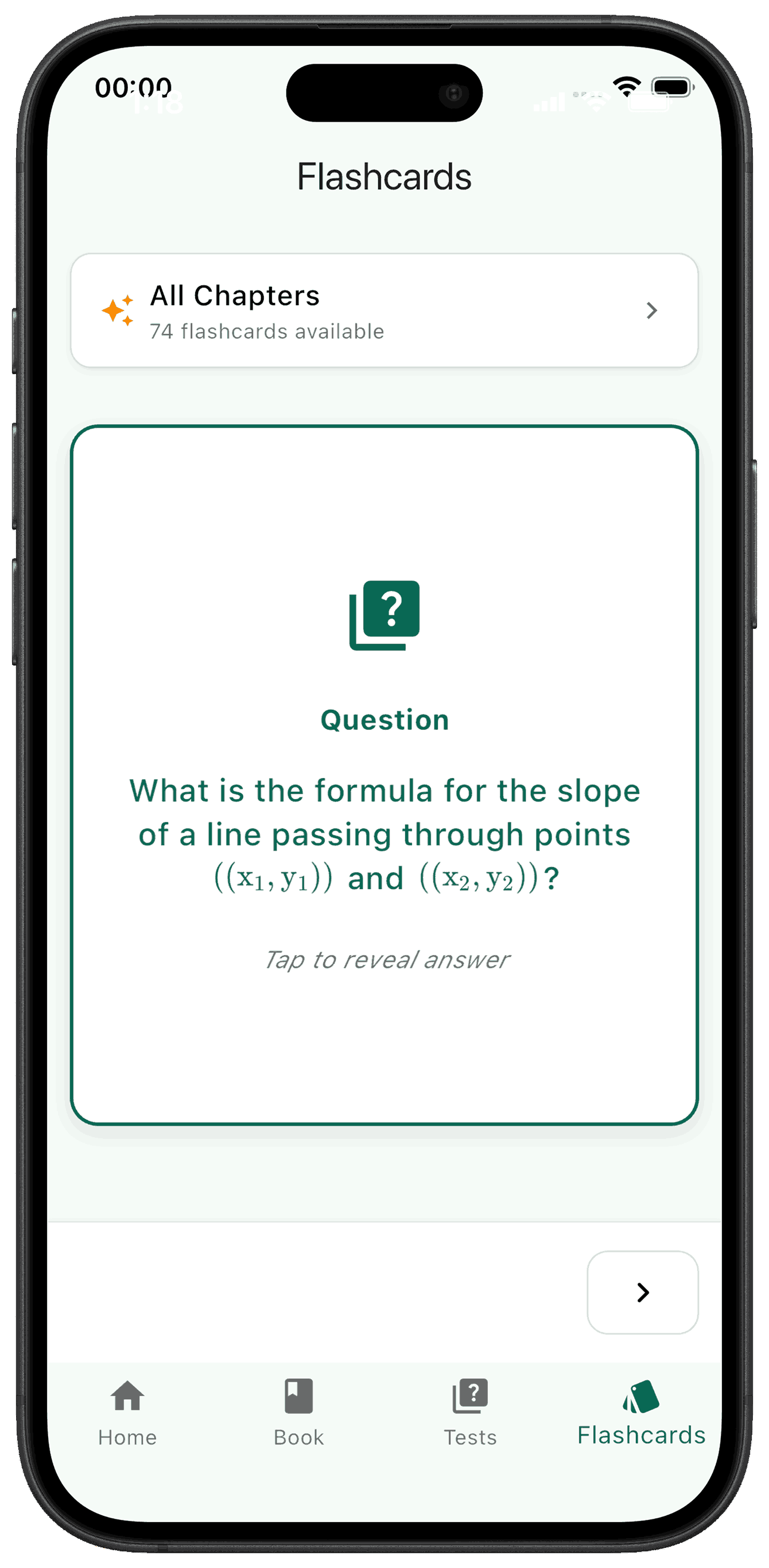
Keep formulas and strategies ready
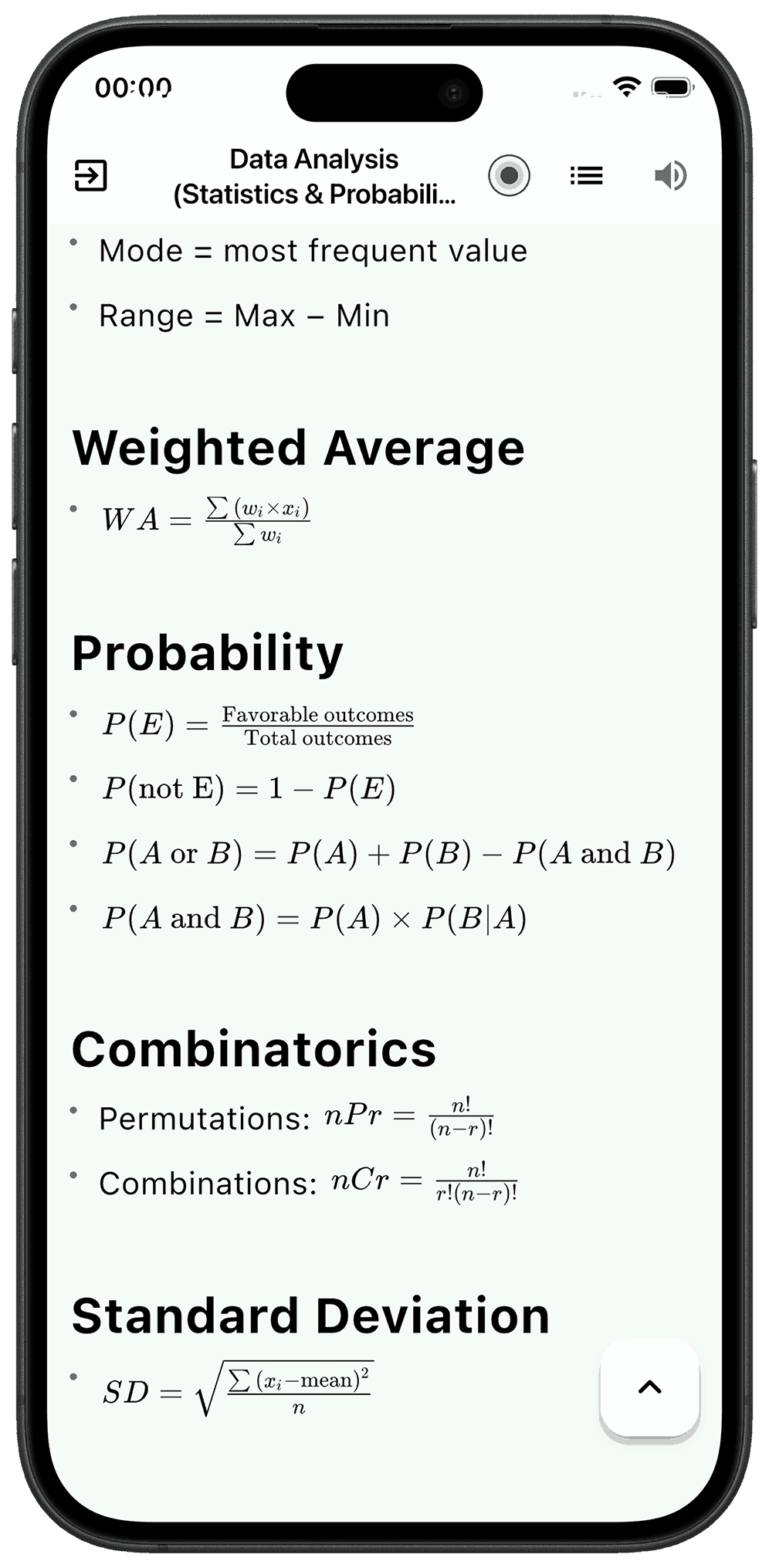
Use quick flashcards to lock in formulas, properties, and problem-solving patterns. Build fast recall for slope, exponents, probability, geometry, and the shortcuts that save time on test day.
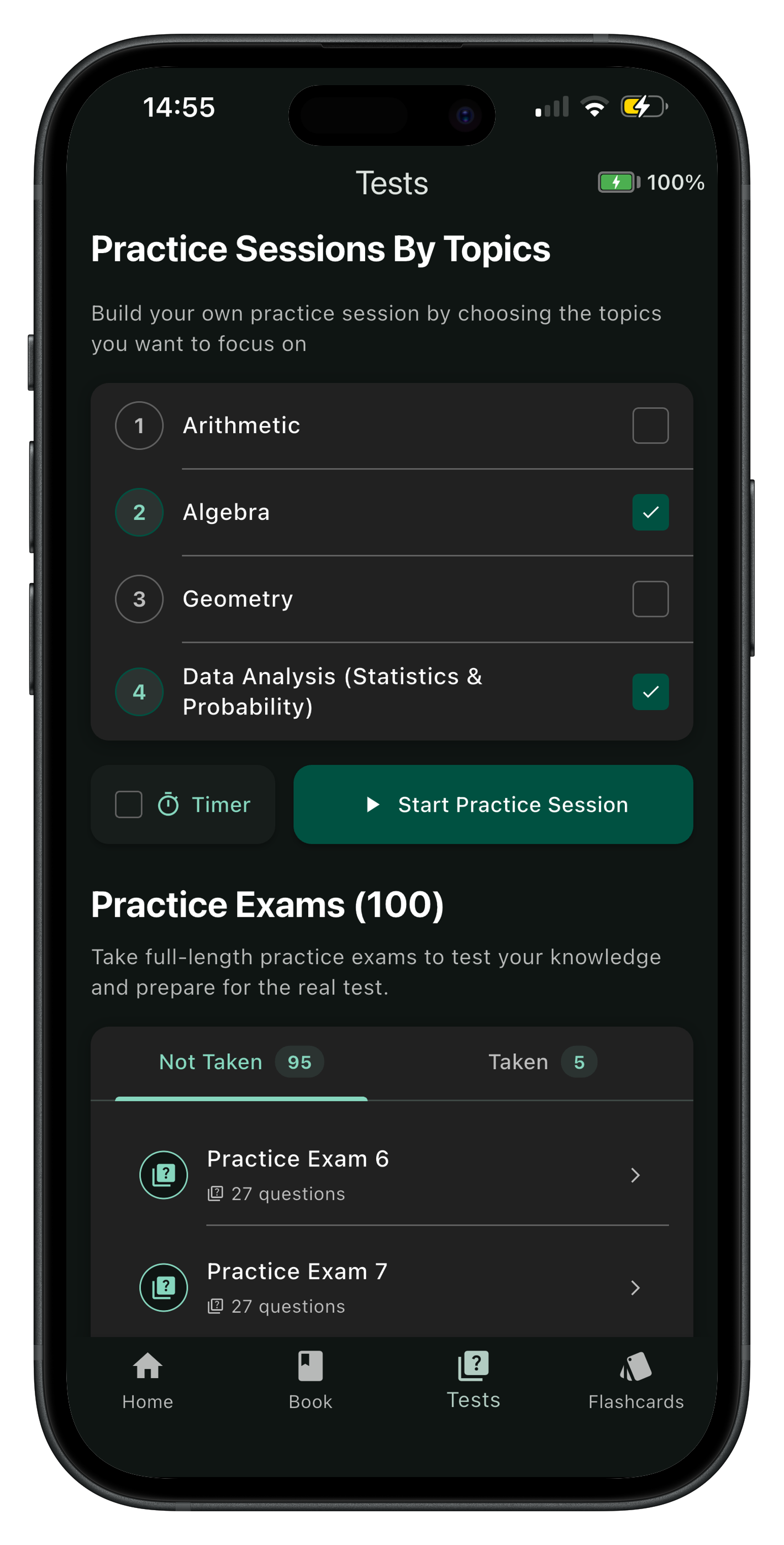
DARK MODE
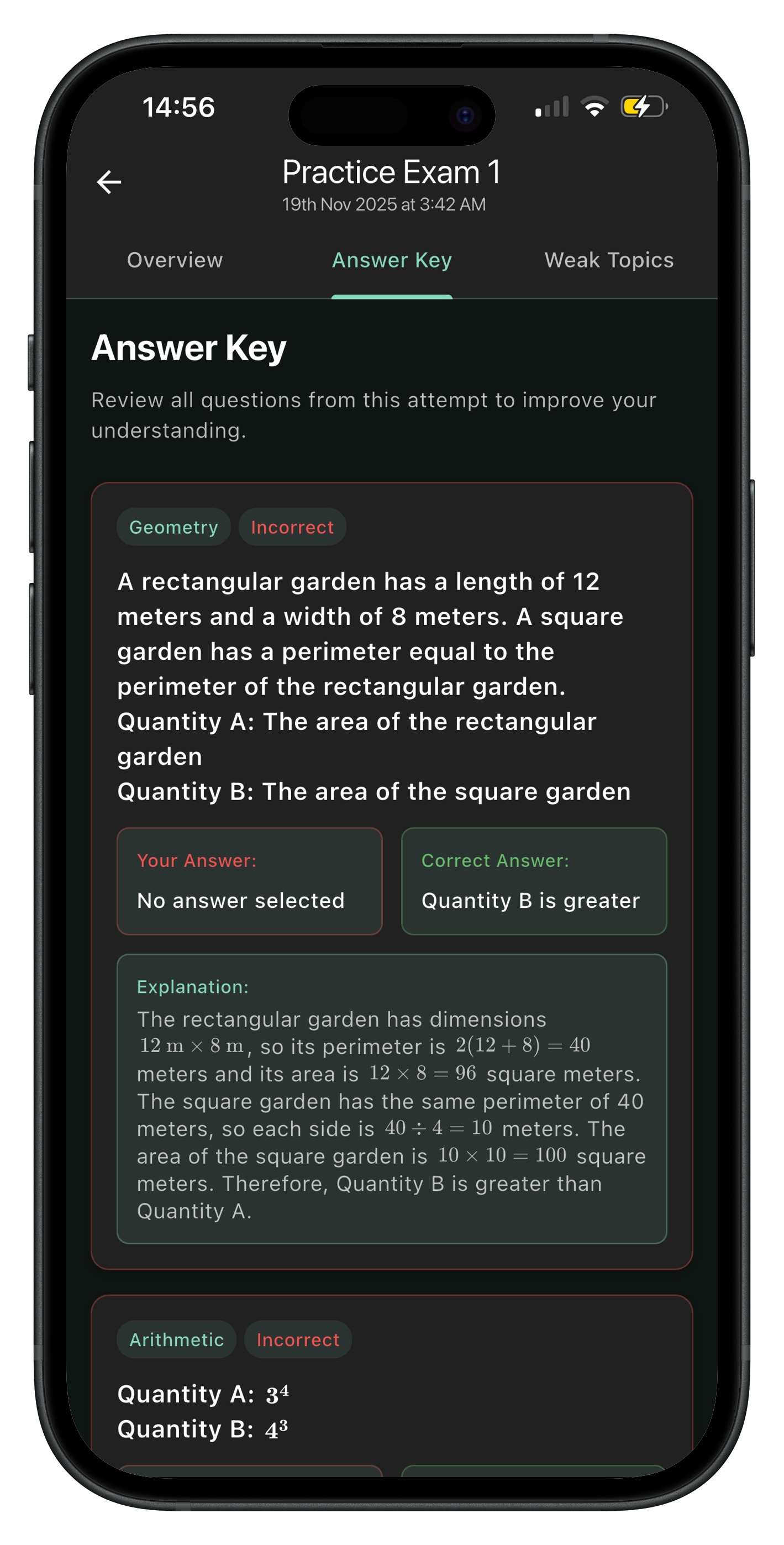
Study comfortably day or night
Switch to a focused dark interface for late-night formula review, timed practice, and quick flashcard sessions. Keep your GRE Quant prep calm, readable, and distraction-free whenever you study.
ABOUT THE TEST
Everything you need to know before you prepare
The GRE Quantitative Reasoning section is one of three scored sections on the GRE General Test, administered by ETS. It measures your ability to understand and interpret quantitative information, reason mathematically, and apply concepts from arithmetic, algebra, geometry, and data analysis to solve problems. Unlike subject-specific graduate exams, the GRE Quant section tests precise logical thinking applied to well-defined problems, not advanced calculus.
Since September 2023, the GRE has been significantly shorter. The Quantitative Reasoning section now consists of two sections of approximately 20 questions each, with 35 minutes per section. The test is section-adaptive: your performance on the first Quant section determines the difficulty of the second. A strong first section is the only path to the highest scaled scores, and each correct answer carries more weight.
Scores are reported on a scale of 130 to 170. The section covers four content areas:
- Arithmetic. Number properties, fractions, ratios, percentages, and sequences. No formula sheet is provided, so key formulas must be memorised before test day.
- Algebra. Equations, inequalities, functions, and exponents. Questions hinge on precise reading; words like "integer," "prime," "non-negative," and "least" change the correct answer entirely.
- Geometry. Lines, angles, triangles, circles, quadrilaterals, coordinate geometry, and 3D figures. Diagram proportions are not reliable, so rely on stated information only.
- Data Analysis. Descriptive statistics, probability, distributions, and data interpretation from graphs, tables, and charts. Misreading axis scales or units is the most expensive category of careless error.
Questions appear in four formats: Quantitative Comparison, multiple-choice select one, multiple-choice select one or more, and numeric entry. Each format rewards a different strategy, from simplifying comparisons to checking every option in select-one-or-more questions.
The most consistent difference between candidates who score 165+ and those who plateau in the 155-160 range is not raw mathematical ability. It is precision and strategy. Analytics-driven preparation, identifying weak topic areas and drilling them systematically, is what converts a 158 into a 165.
FAQ
Common Questions About the GRE Quant Section
Everything you need to know before you start preparing and on test day.
What is a good GRE Quant score?
A score of 160 places you around the 76th percentile, 165 reaches the 85th to 90th percentile, and 169-170 puts you in the 93rd to 97th percentile. For STEM PhD programmes and top CS or engineering degrees, 165+ is commonly expected. For MBA and social science research tracks, 160+ is typically competitive. Always check median Quant scores for admitted students at each specific programme you're targeting.
How did the 2023 format change affect the test?
Since September 2023, the GRE is shorter: two sections of approximately 20 questions each, 35 minutes per section. The test remains section-adaptive. Strong first-section accuracy is now more critical than before, as early errors can cap your score ceiling regardless of how well you perform later. Fewer questions means each one carries more weight.
What are the four question types?
Quantitative Comparison, multiple-choice select one, multiple-choice select one or more, and numeric entry. Each type rewards a different approach and should be practised separately before combining in full mocks.
What are the most common mistakes on GRE Quant?
Misreading the question is the single biggest source of avoidable wrong answers. Assuming variables are positive, trusting diagram proportions in geometry, misreading axis scales, and spending too long on hard questions are also common ways prepared candidates lose points.
How much time should I spend per question?
The raw average is 1 minute 45 seconds, but timing should vary by type. Quantitative Comparison can often be solved in 60 to 90 seconds. Standard multiple-choice usually needs around 1 minute 45 seconds to 2 minutes. Select-one-or-more questions often need 2 to 3 minutes because every option must be checked.
Can I use a calculator on GRE Quant?
Yes, an on-screen basic calculator is available. It is most useful for multi-step Data Interpretation calculations. For simple arithmetic, mental math is usually faster. No formula sheet is provided, so formulas for areas, volumes, the quadratic formula, exponent rules, and statistical measures all need to be memorised before test day.
How many times can I take the GRE?
Once every 21 days, and up to five times within any rolling 12-month period. ETS ScoreSelect lets you choose which test date's scores to send to programmes, though some programmes ask applicants to self-report all attempts on their application.
How long should I spend preparing?
Most candidates preparing from scratch spend 6 to 12 weeks. Retakers aiming to improve a score typically need 4 to 8 focused weeks targeting diagnosed weak areas. The final two weeks should shift away from new material: timed full-length practice tests, error log review, formula consolidation, and pacing work by question type.
STUDY RESOURCES
Essential guides to help you prepare
Free articles written by our team, based on GRE Quant strategy, formulas, pacing, and analytics.

Mastering Adaptive GRE Quant: Section-Level Strategy
Understand how the first Quant section controls the second, and why early accuracy matters so much for top scores.
Read article →
GRE Quant Formulas You Must Know
A high-yield formula checklist across arithmetic, algebra, geometry, and data analysis, paired with flashcard strategy.
Read article →
Optimize GRE Quant Pacing
Break down realistic time targets by question type and learn when to solve, skip, estimate, or return.
Read article →SANVIAPPS PORTFOLIO
Explore our other exam prep apps
Life in the UK, Citizenship Australia, Driving Theory Test UK, and more.
View all apps


Ready to master GRE Quantitative Reasoning?
Download the GRE Quant prep app with 100+ practice tests, 1000+ questions, formula flashcards, study guide chapters, and detailed analytics.